Five latest important news items for Global South countries (as of mid-October 2026), suitable for a COGGS website ticker. Focused on geoeconomics, development finance, multilateral cooperation, debt, climate, and regional integration:
South Centre statement to G-24 Ministers highlights severe debt and financing pressures on developing countries Debt servicing by low- and middle-income countries now exceeds new external financing (largest net outflow in decades); net financial inflows to low-income countries have fallen sharply. BRICS summit flagged major gaps in climate adaptation/mitigation funding and shrinking development finance. (13 Oct 2026, Bangkok). Southcentre
Latin America & Caribbean countries adopt ECLAC proposals for development transformations amid global ruptures At the 41st ECLAC session (Dominican Republic, 7–9 Oct), over 35 delegations approved resolutions backing a comprehensive approach to development, navigating geopolitical shifts, value-chain changes, and opportunities for the region. (9 Oct 2026). Cepal
BRICS continues to expand opportunities for Global South cooperation and development Recent coverage underscores BRICS (now broader membership including more African states) advancing infrastructure, clean energy, digital platforms, food security (proposed Grain Exchange), and New Development Bank financing (~$43 bn for 140 projects). Emphasis on South-South solidarity and Global Development Initiative impacts. (Ongoing into Oct 2026, building on Sept summit). dailynews.gov
Global South pushes for greater voice in global governance and UN/IMF/World Bank reforms At UNGA 81 and related forums, African, Asian, and other developing countries reiterated demands for Security Council reform (e.g., permanent African seats), better representation in international financial institutions, and addressing the “4F” crisis (food, fuel, fertilizer, finance). (Late Sept–early Oct 2026). Pressenza
Climate impacts and adaptation funding remain critical for vulnerable Global South nations Nepal and other Himalayan/developing countries highlight disaster costs and call for climate justice/reparations; broader concerns over adaptation funding shortfalls and extreme weather (e.g., El Niño-linked events) affecting food security and economies. (Sept–Oct 2026 reporting). NYTimes
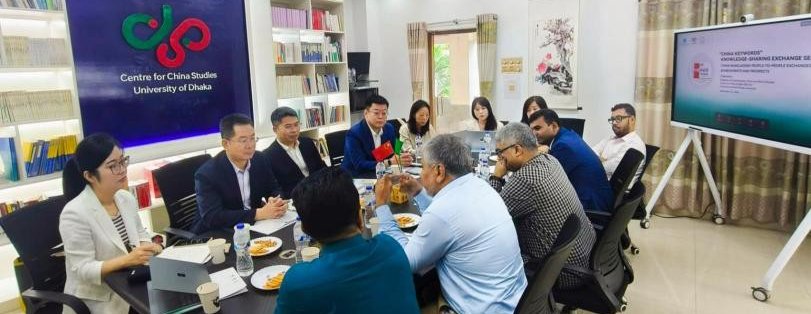
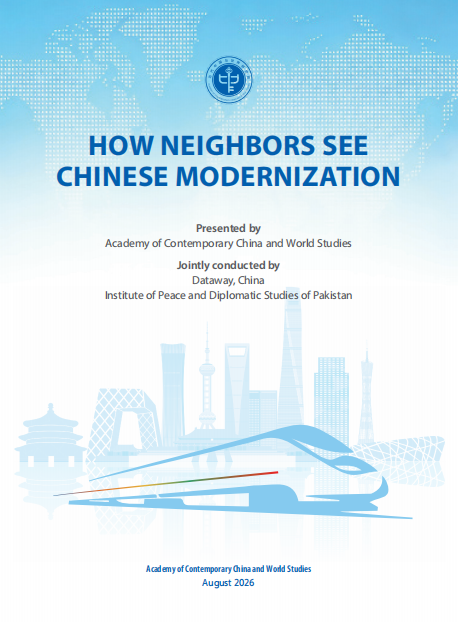
‘How Neighboring Countries View China’s Modernization Released in Bangladesh
September 21, 2026
The survey was organized and prepared by a research team from ACCWS. Focusing on public perceptions of China’s modernization among neighboring Asian countries, the report examines how people in the region understand China’s development experience, development concepts, and cooperation practices.
The survey covered 10 Asian countries, including Tajikistan, Pakistan, Singapore, Thailand, and Vietnam. It also incorporated findings from the report China’s National Image in Bangladesh, released by the Centre for Alternatives in Bangladesh in 2025, conducting a comparative analysis of public perceptions of China’s modernization among people in different Asian countries.
The survey covered 10 Asian countries, including Tajikistan, Pakistan, Singapore, Thailand, and Vietnam. It also incorporated findings from the report China’s National Image in Bangladesh, released by the Centre for Alternatives in Bangladesh in 2025, conducting a comparative analysis of public perceptions of China’s
modernization among people in different Asian countries.
The report shows that China’s development achievements have become an important window through which people in Asian countries understand Chinese modernization. Achievements in areas such as technological innovation, infrastructure development, economic growth, poverty reduction, and international cooperation have attracted broad attention from regional publics.
The survey finds that people in neighboring countries increasingly understand China’s modernization through concrete development outcomes and practical experiences. Chinese products and technologies have become part of everyday life in many countries, while cooperation projects in infrastructure, industry, and connectivity have provided important channels for people to observe China’s development.
The report also highlights that young people represent an important group in understanding China and promoting people-to-people exchanges. Through social media, education, tourism, and other channels, young people have developed more diverse perspectives on China’s development and international cooperation.
The report notes that China and Bangladesh share common aspirations in exploring modernization paths suited to their own national conditions, improving people’s well-being, and promoting common development through openness and cooperation. It suggests that the two countries further strengthen youth exchanges, academic cooperation, cultural communication, and people-to-people interactions to enhance mutual understanding and expand cooperation opportunities.
Bangladeshi experts attending the event noted that the report provides an objective analysis of international perceptions of Chinese modernization and offers valuable reference for deepening China-Bangladesh people-to-people exchanges and enhancing mutual understanding between the two peoples.
The event was jointly hosted by ACCWS and Centre for China Studies SIIS-DU, with support from the Confucius Institute at the University of Dhaka. ACCWS is a national-level think tank specializing in international communication, global perception studies, and international public opinion research. The institute has conducted extensive research on how China is understood by the international community and has continuously released a series of research reports and publications to promote dialogue and mutual understanding between China and the world.
Service Trade: The New Engine for BRICS Sustainable Growth
Professor Li Jiashan / September 21, 2026
As the BRICS community continues to expand and deepen multilateral cooperation, global economic competition is gradually shifting from traditional goods trade to modern service trade. For emerging economies seeking long-term, inclusive and sustainable development, service trade has become a core bond that connects industrial upgrading, digital transformation and people’s well-being. Within the BRICS framework, China and India, as the two largest developing economies in the bloc, boast distinctive and complementary service industry strengths, creating enormous potential for joint growth and South-South cooperation.
India has long established unique global advantages in modern service sectors. As a world-renowned service powerhouse, India leads in information technology services, digital solutions, pharmaceutical consulting, professional outsourcing and cross-border creative services. Its large pool of skilled English-speaking professionals, mature digital public infrastructure and globally recognized service standards have laid a solid foundation for high-value cross-border service trade. India’s service sector not only supports its own rapid economic modernization but also provides professional, cost-effective and scalable service resources for global industrial chains.
China presents equally powerful and complementary strengths in service trade. China excels in infrastructure services, cross-border logistics, financial services, cultural and tourism trade, engineering services and digital platform services. With complete industrial supporting systems, large-scale market demand and mature international service delivery experience, China can provide systematic, standardized and large-scale service support for BRICS industrial cooperation, cross-border investment and connectivity building.
The economic structures of China and India are highly compatible in service trade cooperation. While India dominates high-end professional and digital services, China leads in systematic industrial services and market-oriented comprehensive services. This complementarity enables the two countries to move beyond simple trade exchanges and jointly build a more resilient regional service industry chain. Under the BRICS multilateral mechanism, such bilateral synergy can further radiate to all member states, promoting balanced, green and sustainable development across the bloc.
In recent years, BRICS countries have reached wide consensus on advancing digital service trade, trade facilitation and small and medium-sized enterprise cooperation. Facing rising global unilateralism and trade protectionism, BRICS members are committed to safeguarding the multilateral trading system and promoting open, inclusive economic globalization. Service trade cooperation has become the most flexible, dynamic and promising field to drive new growth momentum.
For future BRICS sustainable development, deepening service trade integration carries profound practical significance. First, it helps all member states upgrade industrial structures, accelerate digital transformation and reduce reliance on traditional resource-driven growth models. Second, cross-border service cooperation facilitates technological exchange, talent mobility and experience sharing, improving the overall competitiveness of emerging economies. Third, service trade closely connects people’s livelihoods, covering education, healthcare, tourism and digital public services, enabling BRICS cooperation to deliver tangible benefits to ordinary people.
Looking ahead, BRICS countries should further open service sectors, optimize cross-border service supervision, strengthen digital service standard coordination, and expand local currency settlement in service transactions. By fully leveraging the complementary advantages between India and China, the bloc can build a closer, more efficient and innovative service trade cooperation ecosystem.
Driven by service trade, BRICS will continue to grow into an important force leading global sustainable development, empowering the collective revitalization of all developing countries.
Professor Li Jiashan Beijing International Studies University President of China institute for service trade
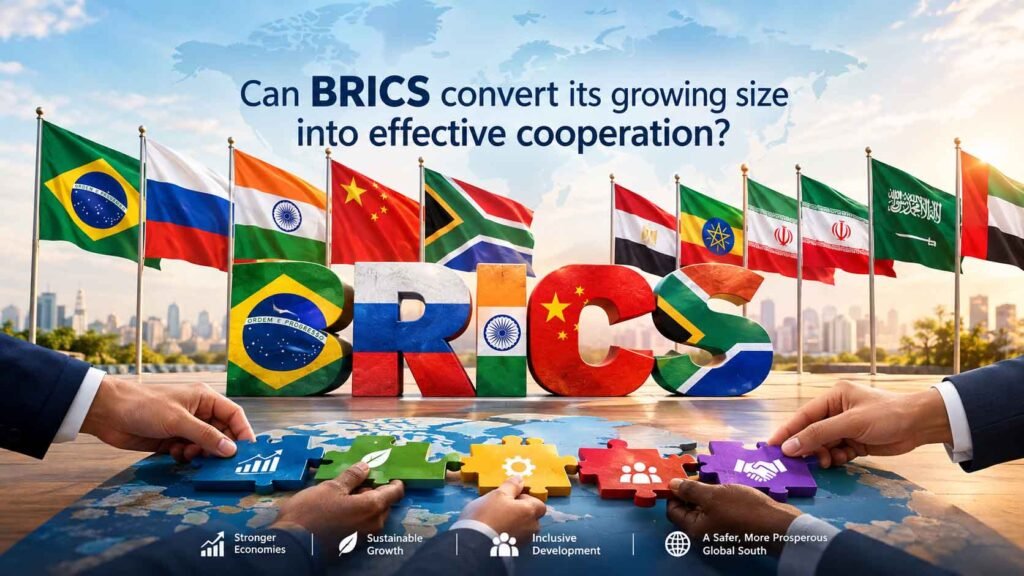
Can BRICS convert its growing size into effective cooperation
By Jianxi Liu / September 16, 2026
BRICS cooperation has reached an important turning point. What began two decades ago as a dialogue among four emerging economies has developed into a broader platform representing a substantial share of the world’s population, economic output and political influence. Its expansion has given the grouping greater weight, but it has also raised a more demanding question: can BRICS convert its growing size into effective cooperation?
The answer will depend on whether BRICS can translate political vision into practical results. At the just-concluded BRICS summit in New Delhi, Chinese President Xi Jinping called on BRICS countries to become “four pioneers”: pioneers in innovation-driven development, peace and stability, mutual learning between civilizations, and reform of global governance. These four priorities offer a useful framework for understanding the grouping’s future responsibilities – and for testing whether it can meet them.
BRICS does not need to become a military or ideological bloc. Its value lies in bringing together major emerging economies and developing countries to coordinate their interests, strengthen the voice of the Global South and promote a more balanced international order. But declarations alone will not be enough. The credibility of BRICS will ultimately be measured by what it delivers.
The first of Xi’s four proposals is for BRICS to become a pioneer in innovation-driven development. This is perhaps the most direct response to the economic challenges facing emerging economies.
Many countries in the Global South remain constrained by weak industrial capacity, limited access to finance, technological dependence and vulnerability to fluctuations in commodity prices. They need more than market access. They need the ability to produce, innovate and move up the value chain.
BRICS cooperation should therefore focus on industrial upgrading, scientific research, artificial intelligence, digital connectivity and skills development. Xi has proposed greater cooperation in areas including AI, digital industries, smart manufacturing and science-and-technology talent development. These initiatives could help emerging economies participate more actively in the next phase of technological change.
However, technological cooperation will require more than sharing equipment or signing agreements. BRICS members need to develop open and inclusive platforms, support joint research and expand digital-skills training. They also need common approaches to data security, intellectual-property protection, cybersecurity and responsible AI governance.
This is closely connected to the idea of high-quality development. High-quality development is not simply rapid growth. It means higher productivity, stronger innovation, better jobs, environmental sustainability and greater resilience. BRICS should help its members move from dependence on raw materials and low-value manufacturing toward more advanced and productive economic activities.
China’s experience offers important lessons, but it should not be treated as a universal model. Each country must identify its own comparative advantages and development priorities. The broader lesson is that successful development requires investment in infrastructure, education, technology and institutions, as well as the flexibility to adjust policies as circumstances change.
Xi’s second proposal is for BRICS to become a pioneer in upholding peace and stability. This is especially important in a world marked by geopolitical rivalry, regional conflicts, unilateral sanctions and growing uncertainty.
BRICS can provide a platform for dialogue and help defend the principles of the United Nations Charter. Its members can support political settlements, oppose the use of force and encourage diplomatic solutions to international disputes.
This responsibility begins with the relationship between China and India. The two countries are major developing economies, leading members of BRICS and important representatives of the Global South. Their cooperation could strengthen the grouping, while prolonged confrontation could weaken its cohesion.
True, China and India have differences. They also compete in manufacturing, technology, trade and regional influence. But competition does not have to become confrontation. As Xi has said, the two countries should approach their relationship from a strategic and long-term perspective and seek to learn from each other’s strengths.
A stable China-India relationship would benefit not only the two countries but also the wider BRICS mechanism. Practical cooperation could begin in areas such as public health, climate change, food security, development finance, trade facilitation and people-to-people exchanges. The objective should not be to eliminate all differences, but to manage them responsibly and prevent bilateral tensions from blocking cooperation on shared interests.
BRICS will also need consistency in its approach to international crises. A credible commitment to peace cannot be selective. The group should apply its principles fairly, regardless of which major power or regional actor is involved.
Xi’s third proposal is for BRICS to become a pioneer in facilitating mutual learning between civilizations. This dimension is sometimes underestimated because it appears less concrete than trade, finance or technology. In fact, it is essential to building durable cooperation.
BRICS brings together countries with different political systems, cultural traditions, religions and historical experiences. Their diversity is not necessarily a weakness. It can become a source of creativity if members treat differences as an opportunity for learning rather than as a reason for suspicion.
China and India offer a particularly important example. Both are ancient civilizations with rich intellectual traditions and long histories of cultural exchange. Both have pursued modernization while seeking to preserve distinctive national identities. Greater exchanges among universities, think tanks, filmmakers, young people and business communities could help reduce misunderstanding and strengthen social foundations for bilateral relations.
Mutual learning should not be reduced to cultural performances or official commemorations. It should include serious exchanges on development policy, poverty reduction, urbanization, education, healthcare, environmental protection and digital transformation.
Such exchanges can also make economic cooperation more sustainable. Business relationships depend not only on contracts but also on trust and familiarity. People-to-people ties can provide a foundation for cooperation when political relations face difficulties.
Xi’s fourth proposal is for BRICS to become a pioneer in reforming and improving global governance. This is the area in which BRICS is likely to face the greatest expectations.
The existing international system has delivered important benefits, but its institutions no longer fully reflect the distribution of population, economic power and political influence. Developing countries remain underrepresented in major financial institutions, while the global trading system has become increasingly fragmented.
BRICS should push for practical reforms in the United Nations, the IMF, the World Bank and the WTO. Priorities could include greater representation for developing countries, improved access to development finance, more effective debt-management mechanisms, stronger climate financing and fairer rules for digital trade.
The grouping should also promote cooperation in local-currency settlement and cross-border payments, while recognizing that building a stable international financial system requires transparency, sound regulation and confidence among participants.
At the same time, BRICS should avoid turning global governance reform into a zero-sum contest between the Global South and the West. A more representative system should also be more effective. BRICS will gain wider international support if it presents itself as a force for inclusion, stability and problem-solving rather than as an instrument of confrontation.
The “four pioneers” provide BRICS with a coherent political framework. Innovation addresses development; peace creates the conditions for prosperity; mutual learning builds trust; and global-governance reform gives emerging countries a stronger voice.
But the framework will matter only if it produces measurable outcomes. Expansion alone will not make BRICS stronger. A larger grouping will be meaningful only if it can build trust, manage differences and deliver benefits to its members and the wider Global South.
Xi’s “four-pioneer” proposal gives BRICS a timely direction. The challenge now is to move from principle to practice. The Global South does not need another grand promise. It needs a platform that helps countries develop, trade, innovate, preserve peace and participate more fairly in global decision-making.
BRICS can become such a platform, but only if its ambition is matched by openness, discipline and action.
Jianxi Liu is a Beijing-based analyst of political and international relations. With 10 years of experience in media, she writes on topics pertaining to the US, the EU and the Middle East.
The Timeless Pair: China, India, and the New Delhi Moment
By Himadrish Suwan / September 15, 2026
Bharat Mandapam convention center is all set to host the 18th BRICS Summit in New Delhi, India, September 10, 2026.
As chairman of the Confederation of Young Leaders of India, I believe one dimension deserves substantially greater attention: youth and people-to-people engagement.
The long-term China-India relationship could not be sustained through governmental engagement alone. The two countries are home to hundreds of millions of young people, students, researchers, entrepreneurs, innovators, and emerging leaders, yet opportunities for meaningful interaction between young Indians and Chinese remain few and far between.
We need more university partnerships, student exchange activities, young leader dialogues, research collaborations, cultural programs, and entrepreneurial networks connecting young generations in both countries.
Young people should not inherit outdated perceptions of one another. They should be given opportunities to meet, debate, collaborate, and understand each other’s societies directly.
My own engagements with Chinese institutions and young people have only reinforced my opinion that there is considerable curiosity about India in China, just as there is considerable interest in understanding China among young Indians.
Institutionalizing such engagement within the broader BRICS framework could be particularly valuable. A stronger BRICS youth architecture can connect young leaders not only from China and India, but also from across its increasingly diverse membership.
Beyond New Delhi Summits create political direction, but institutions, businesses, universities, social organizations, and citizens must transform that direction into lasting cooperation.
For China and India, this means continuing dialogue even when circumstances are difficult. It means expanding areas of practical cooperation while addressing differences responsibly. Above all, it means recognizing that neither geography nor history allows these two civilizations to remain indifferent to one another.
India’s timeless philosophy of Vasudhaiva Kutumbakam (the world is one family) offers a valuable principle for this moment, which finds a natural echo in China’s vision of a community with a shared future for humanity.
A multipolar world should not become more divided. BRICS should not define its success based on opposition to any country or grouping. Its greater contribution can be to advocate a global architecture that is more representative, inclusive, and responsive to the aspirations of developing societies.
China and India have assumed a special responsibility within that endeavor. The relationship between the two countries will inevitably encounter moments of complexity. Yet history should encourage leaders to take a longer view. Civilizations measured in millennia should have the confidence to navigate differences measured in years.
As BRICS moves beyond the New Delhi summit, the challenge becomes larger than drafting declarations or expanding institutional mechanisms. It is about building cooperation habits and creating constituencies for peace, development, and dialogue.
If China and India can steadily expand mutual understanding while responsibly managing their differences, their cooperation can become a powerful force for stability and development—not only for Asia, but also for the Global South and the wider world.
The author is chairman of the Confederation of Young Leaders of India.
(The content is provided by Beijing-based China-India Dialogue.)
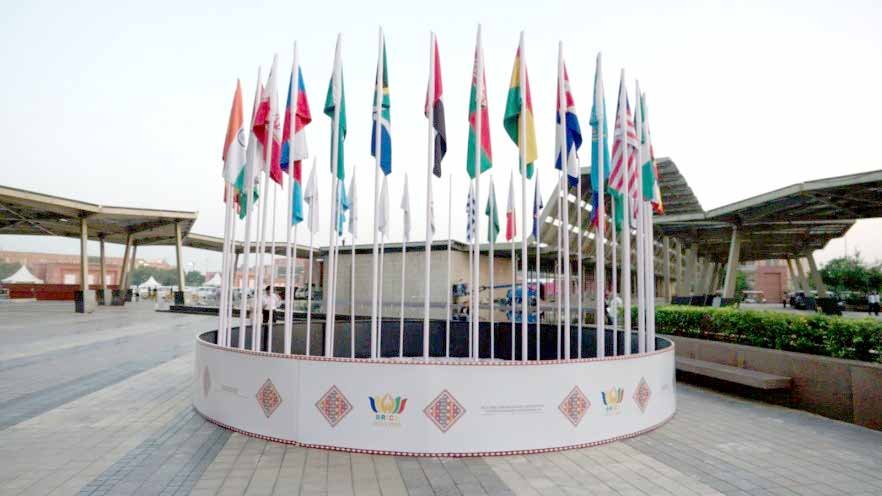
Flags of BRICS countries are seen at Bharat Mandapam in New Delhi, India, September 10, 2026, ahead of the 18th BRICS Summit.
When examining the relationship between China and India, some analysts tend to focus on friction in contemporary geopolitics. At multilateral platforms like BRICS, however, meetings between their leaders are closely watched for signs of progress.
Viewing these two neighbours strictly through the lens of 20th-century geopolitical theory misses the larger picture. Long before modern nation-states or trade blocs emerged, China and India stood as enduring civilizational pillars. Over centuries, they contributed richly to human philosophy, science, and ethics.
This longer history suggests that both nations can rise above periodic diplomatic difficulties by looking past temporary differences and drawing strength from their shared cultural heritage and global contributions. As India chairs the BRICS in 2026, this perspective is especially timely. The future of China-India relations will continue to require careful management of differences, but it can also benefit from a stronger emphasis on dialogue, mutual understanding, and common ground.
A Long History of Intellectual Exchange The development of human civilization was greatly enriched by innovations and ideas that originated from the Indian subcontinent and the Chinese heartland. Exchange along the ancient Silk Road and maritime trade routes was never merely about commerce — it served as a conduit for transformative ideas.
India gave the world foundational concepts of “Ahimsa” (non-violence), deep metaphysical enquiry through the Upanishads, and the compassionate frameworks of Buddhism. Chinese philosophies that have gone global include Confucian ethics, emphasizing social duty, filial piety, and governance through moral example, alongside the natural harmony of Daoism.
Indian scholars formulated the concept of zero and the decimal system, which revolutionized global mathematics, and medical practitioners developed the holistic medical science of Ayurveda. China introduced transformative technological breakthroughs — papermaking, printing, gunpowder, and the compass — alongside advancing sophisticated astronomy and acupuncture.
The eighth-century astronomer Gautama Siddha, also known as Qutan Xida in China, was of Indian descent yet born in Chang’an, the thriving capital of the Tang Dynasty (618-907). He played a pivotal role in compiling The Great Tang Treatise on Astrology of the Kaiyuan Era. Several long and arduous journeys undertaken by Chinese scholar-monks, including Faxian’s pilgrimage and Xuanzang’s years of study at Nalanda, proved equally crucial to the exchange of knowledge and culture between the two civilizations.
Common Values of Humanity The modern world is confronted with geopolitical fragmentation, economic instability, and climate crises. Against this backdrop, the core values embedded in Indian and Chinese classical traditions present a constructive alternative to competitive, zero-sum worldviews.
India’s ancient ethos of “Vasudhaiva Kutumbakam” (“The world is one family”) resonates strongly with the traditional Chinese concept of tianxia datong (“universal harmony under heaven”). Both philosophies reject the premise that international relations must involve a clash of civilizations. Instead, they view the global community as an interconnected whole, in which national growth and global well-being are mutually reinforcing.
Long before modern climate agreements, both traditions viewed human life as intrinsically connected to the natural world. The Indian reverence for nature and the Chinese principle of harmony between heaven and humanity offer enduring ethical foundations for global environmental stewardship today.
For centuries, cultural currents between China and India flowed primarily through scholars, monks, merchants, and intellectual exchange. The Five Principles of Peaceful Coexistence, officially initiated in the 1950s, underscore mutual respect for sovereignty and territorial integrity, mutual non-aggression, non-interference in each other’s internal affairs, equality and mutual benefit, and peaceful coexistence.
Cultural Understanding through BRICS In today’s international system, the BRICS framework offers a vital institutional platform for New Delhi and Beijing to translate these historical values into practical cooperation.
Within BRICS, the two nations have worked together to give emerging economies a stronger voice in global decision-making. The success of the New Development Bank demonstrates that China and India can, through cooperation, take the lead in establishing multilateral financial institutions in the future to finance essential infrastructure across the Global South.
Yet institutional cooperation has shown its limits. Diplomatic summits and disengagement protocols are critical for managing short-term border tensions, but they merely treat symptoms, not the deeper trust deficit. Deep-rooted civilizational respect offers a more reliable foundation for recovery.
To build long-term stability, both countries need to inject more cultural diplomacy into their engagement. BRICS and regional summits should host cultural forums focused on shared history, classical literature, philosophy, and ancient arts. Expanding university partnerships, joint research, and translation projects involving Chinese and Indian scholars would help train future policymakers who understand each other’s cultural contexts. Student exchange programs between Chinese and Indian universities would further help cultivate a new generation of scholars and policymakers. Encouraging cultural tourism, media exchange, and youth initiatives would help ease rigid stereotypes and soften media-driven public hostility.
The BRICS framework offers China and India a practical platform for collaboration and coordination on global challenges, yet institutional mechanisms alone cannot substitute for genuine trust. By drawing on their shared civilizational heritage and common values of harmony, dialogue, and mutual respect, both countries can expand cooperation, deepen mutual understanding, and build a more stable and constructive relationship in a multipolar world.
The author is executive editor of Hindusthan Samachar, a leading multilingual news agency in India.
(The content is provided by Beijing-based China Pictorial Publications.)
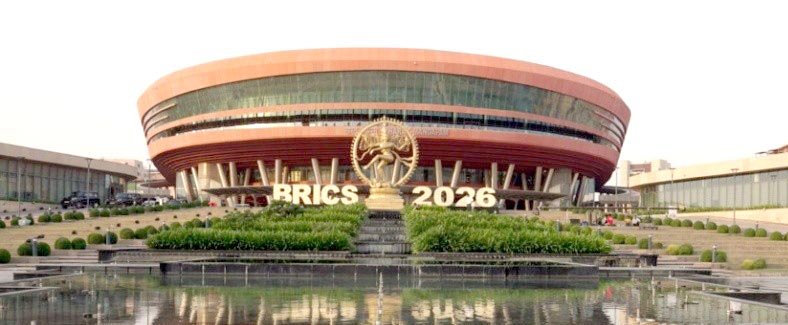
The BRICS 2026 logo is seen in New Delhi, India, September 10, 2026, ahead of the 18th BRICS Summit.
BRICS at 20: A New Decade of Cooperation By Rajiv Bhatia / September 15, 2026
The 18th BRICS Summit, scheduled to be held in New Delhi on September 12 and 13, will mark two decades since this plurilateral forum was first organized. It is an informal institution with great influence in the world. What began as a grouping of four countries has expanded into a large family of 11 member states and 10 partner states today. More than 30 countries have expressed interest in joining the BRICS family.
So has it actually been the hugely successful project that such data would suggest? Or do the critics and skeptics have a case that BRICS is mostly just talk?
The reality is more complex and nuanced.
Clearly, if the leaders of BRICS member and partner countries believed that BRICS was not a useful forum, they would not attend the Delhi Summit, nor would any of the other invited leaders. But considering that a likely majority of these nations and entities will be represented at the highest level, their presence and proactive participation indicate confidence in the utility and value of what BRICS has achieved so far. This also shows a commitment to helping it realize its potential.
Greater Influence BRICS has emerged as one of the most important forums for the Global South, resolved to define and advance a multi-dimensional agenda covering reform of international governance, sustainable development, increased financing for development, and promotion of a fairer world. A broad consensus among international watchers holds that BRICS acts as a counterweight to the G7, representing the perspectives and interests of emerging markets and developing countries (EMDCs) and serving as a vital player in the G20.
At their meeting in May 2026, the BRICS foreign ministers agreed that the forum continued to play a pivotal role in raising the concerns and priorities of the Global South as well as in promoting a more just, sustainable, inclusive, representative, and stable international order based on international law.
As the chair of the 2026 BRICS gathering, India, a founding member, is not only conscious of its responsibilities but committed to strengthening the forum. Having assumed the BRICS presidency in 2012, 2016, and 2021, India recognizes its fourth opportunity as coming at the most challenging time considering the ongoing major conflicts in Ukraine and the Middle East. Hence, it is important to manage complex geopolitics in a prudent manner to navigate the BRICS ship through deep fissures, friction, and tensions through focusing on intra-BRICS cooperation in diverse sectors. Observers hope the grouping will be able to emerge as a stronger and motivated player on the world stage thanks to efforts from all members.
Towards a More Cohesive BRICS Beyond geopolitics, India’s BRICS chairship has also placed emphasis on deepening intra-BRICS cooperation. Its stated overarching theme for this session is “Building for Resilience, Innovation, Cooperation and Sustainability.” Over 350 events and meetings have already been held involving ministers, think tanks, civil societies, business, youth, and other stakeholders. A preview of what the New Delhi summit this year could achieve can come in two different ways.
First, it will review the major gains of the previous three BRICS summits. The Johannesburg summit in 2023 portrayed BRICS as a partnership for “inclusive multilateralism,” committed to fostering a global environment of peace and development. It succeeded in resolving the vexing issue of BRICS membership expansion.
The Kazan summit in 2024 highlighted the virtues of multipolarity and multilateralism, with the former expanding opportunities for the EMDCs, and the latter presented as an instrument to secure a more agile and responsive global system. Russia’s BRICS presidency helped evolve consensus on new partner countries. The Rio de Janeiro summit in 2025 voiced serious concern over the prevailing polarization and fragmentation among states. It also advanced implementation of the Strategy for BRICS Economic Partnership.
Second, meetings hosted since January 2026 reflect a comprehensive and inclusive approach on all dimensions of the BRICS agenda. A quick recall of some of the key deliberations and their outcomes at the ministerial level provides useful clues. Environment ministers, for example, agreed that the interlinked challenges of climate change, biodiversity loss, and land degradation demand urgent enhanced international cooperation. Culture ministers emphasized culture’s empowering role as a driver of sustainable development and agreed to create a platform for cooperation involving cultural and creative industries. Education ministers sought ways to strengthen early childhood care and education as well as foundational literacy and numeracy. Trade ministers did not issue a joint declaration but reaffirmed the commitment to promoting a fair, open, and rules-based trading system, with a well-functioning World Trade Organization at its core.
The BRICS Think Tanks Council presented a set of recommendations following its detailed deliberations in Lucknow on August 25. They have identified practical pathways to build economic and climate resilience, deepen cooperation on innovation and technology, advance sustainable development, and support a more inclusive and effective multilateral system.
In the days leading up to the New Delhi summit, two observations have become particularly relevant: First, BRICS has struck a sound balance between expanding its family and creating greater cohesion within it. Hence, greater emphasis should be placed on deepening cooperation among the existing BRICS members for at least the next three years. This process needs to be nurtured carefully and continuously. Second, a critical requirement to ensure the continuing success of BRICS is strengthening coordination and convergence among its members, especially among the founding members. They may not agree on every issue, but they must work together closely to expand the arc of agreement and demonstrate mutual sensitivity where they disagree.
This is the path to BRICS becoming a stronger player in the international arena. China, which will assume the presidency of BRICS in 2027, can advance BRICS cooperation and cohesion even further.
The author is a distinguished fellow at Gateway House, a Mumbai-based foreign policy think tank. A former diplomat, he served as the Indian ambassador to several countries and is the author of three books on India’s foreign policy.
(The content is provided by Beijing-based China Pictorial Publications.)
BRICS: Pioneering a More Equitable International Order
By Mohammed Saqib / September 15, 2026
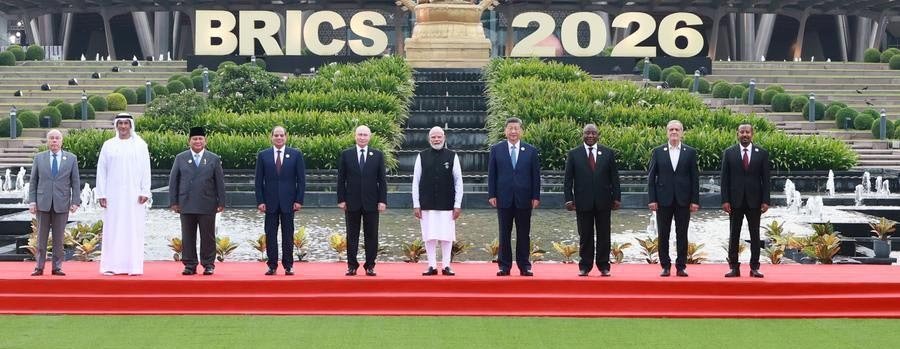
At the 18th BRICS Summit in New Delhi, Chinese President Xi Jinping’s speech covered a wide range of topics, including a call for peace in the Middle East, a push for innovation in artificial intelligence, and a call to reform and improve global governance.
Xi noted that the situation in the Middle East remains complex and fluid. He said that the war is against the common interests of the international community and BRICS should be a pioneer in upholding peace and stability. China will work with fellow BRICS members to play a due role in bringing peace and tranquility to the Middle East.
One of the most forward-looking aspects of Xi’s remarks was his focus on artificial intelligence and innovation-driven development. This focus goes beyond economic issues; it also aims to shape future technology norms. By rallying around innovation, BRICS can advance shared progress.
Xi also noted that BRICS should be a pioneer in reforming and improving global governance. Many countries in the Global South back this vision, as they feel that current international institutions are largely dominated by Western powers. However, established power structures are unlikely to change without strong action. Only with solid coordination among BRICS members can the bloc turn its vision into tangible action.
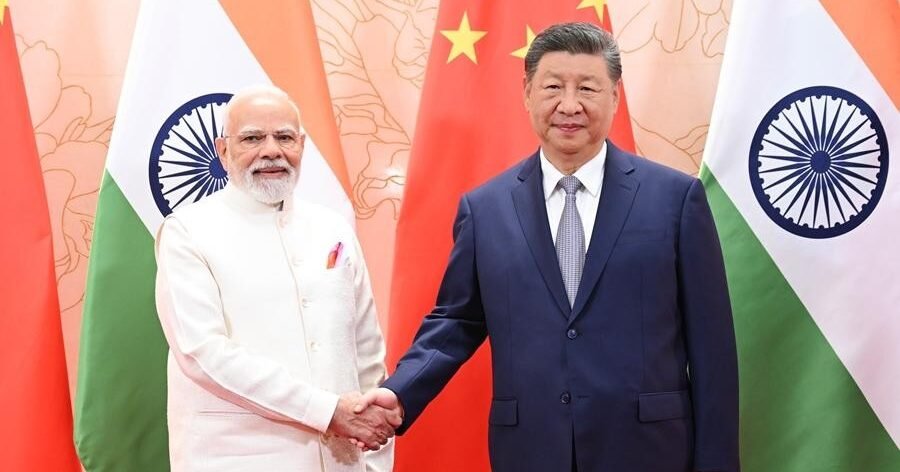
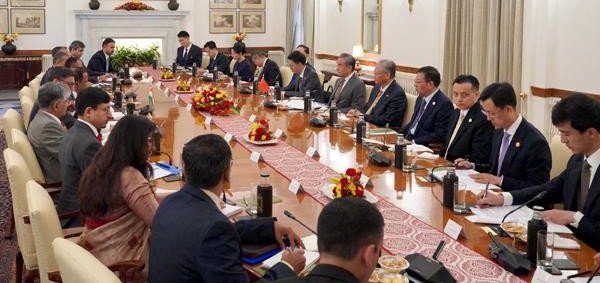
Xi’s meeting with Indian Prime Minister Narendra Modi, on the sidelines of the summit, focused on high-quality development of greater BRICS cooperation and mutually beneficial cooperation between China and India. The meeting signals a move to improve bilateral relations. Meaningful collaboration between the two countries depends on ongoing dialogue and commitment.
Xi’s vision carries far-reaching implications. With China set to assume the BRICS chairship in 2027, expectations are rising for translating this vision into reality. If BRICS members can jointly turn commitments into concrete initiatives for peace, innovation and governance reform, the bloc may grow into a pioneer of our times.
The author is secretary-general of India China Economic and Cultural Council (ICEC).
In September 2026, leaders will convene in New Delhi for the 18th BRICS Summit, with India serving as the host nation. This year’s theme will be “Building for Resilience, Innovation, Cooperation, and Sustainability.” This summit represents an evolution from the original five-member group established in 2009. BRICS has now expanded to include Egypt, Ethiopia, Iran, the UAE, and Indonesia. Additionally, a partner tier includes nearly ten other countries, such as Belarus, Kazakhstan, Nigeria, Malaysia, and Vietnam. BRICS+ collectively accounts for nearly half of the global population and, by purchasing power parity, represents a larger share of global output than the G7. Therefore, it is no longer just a discussion forum. Instead, it has become a constituency, and constituencies ultimately seek to achieve their objectives.
In the context of global economic dynamics, India and China should be considered as complementary engines of growth rather than mere competitors vying for popularity among the Global South or Beijing’s chequebook against Delhi’s charm. Rather, their respective development strategies offer different yet harmonious perspectives. BRICS serves as a valuable platform to integrate and leverage complementary approaches for mutual benefit.
Different instruments, identical objective
China’s economic model is built on scale and delivery. The Belt and Road Initiative has moved somewhere around $1.4 trillion in construction contracts and non-financial investment across more than 150 countries, and 2025 was a record year for new engagement.
China–Africa trade has reached around $300 billion, and zero-tariff treatment, initially extended to 33 least-developed countries under FOCAC 2024 alongside an RMB 360 billion commitment, has since been extended to all 53 African partners. Beijing’s initiatives for global development, security, civilisation, and governance create a framework that guides these activities.
India’s approach focuses on three key areas: infrastructure, accessibility, and human resources. The EXIM Bank provides credit lines totalling about $27–33 billion to around 60 to 65 countries. Since 1964, the ITEC program has trained officials and technicians from over 160 nations. Through the Vaccine Maitri initiative, India has sent about 301 million vaccine doses to more than 100 countries. Additionally, India’s duty-free tariff preference scheme for least developed countries (LDCs) has covered nearly 98 per cent of tariff lines since 2008. Most importantly, India’s Digital Public Infrastructure includes Aadhaar, which serves over 1.4 billion people, and the UPI, which processed a record 23.66 billion transactions worth nearly ₹30 lakh crore (USD 360 billion) in July 2026. This system offers partner countries an open, flexible, and independent model instead of a proprietary platform. Furthermore, India has positioned itself as a convener, amplifying developing nations’ concerns through Voice of the Global South Summits. Rather than competing dollar for dollar, India offers a partnership model that focuses on shared strength and technological empowerment.
Where convergence is already proven
Both countries share a history of productive collaboration, although this is seldom highlighted in reports. Together, they champion the principles of common but differentiated responsibilities in climate negotiations, advocate for special and differential treatment at the WTO, and secured the public stockholding peace clause at the Bali conference. They also express a united stance against unilateral carbon border adjustment measures. The India–South Africa TRIPS waiver proposal from October 2020, which received China’s support, yielded a modest yet tangible outcome at the WTO by June 2022, demonstrating that coalitions within the Global South can effect change within entrenched systems.
In global governance, India and China share common interests in reformed multilateralism. Both nations remain underrepresented in institutions like the IMF and the World Bank relative to their economic weight. The Global South still holds well under 40 per cent of IMF quota shares. China holds 6.40 per cent and India 2.75 per cent, against a US share of roughly 17.4 per cent and an effective veto. The 16th General Review raised total quotas to SDR 715.7 billion without redistributing influence. They both understand that bilateral competition alone won’t resolve this; only coordinated pressure will.
Yet, their approaches to certain systemic changes, such as de-dollarisation, reveal internal heterogeneity. China is promoting the internationalisation of the renminbi and conducts most of its bilateral trade with Russia using national currencies, while India takes a more cautious approach. Although New Delhi has expanded rupee-denominated settlements to bypass friction, it maintains that it has no strategic interest in actively undermining the US dollar, reflecting a more cautious integration into the global financial system.
Conclusion
The 2026 BRICS Summit in New Delhi offers an invaluable opportunity to reshape the dialogue around Global South development by focusing on constructive collaboration rather than ideological competition. Addressing the significant $4 trillion annual financing gap for the Sustainable Development Goals (SDGs) calls for a strategic partnership between the world’s two largest developing economies—India and China. By harnessing the multilateral framework of BRICS and the New Development Bank (NDB) to build trust, these nations can turn structural vulnerabilities into valuable resources.
The proposed agenda emphasises a proactive approach: transitioning from restrictive trade policies and geopolitical grandstanding to fostering actionable, technical public goods. Initiatives like modular digital infrastructure, human capital development, and green manufacturing partnerships exemplify this shift towards sustainable capacity building, aiming to enhance resilience rather than create dependencies. Ultimately, the success of this summit will hinge on our ability to prioritise shared economic resilience and third-market development, cultivating collaboration over bilateral frictions.
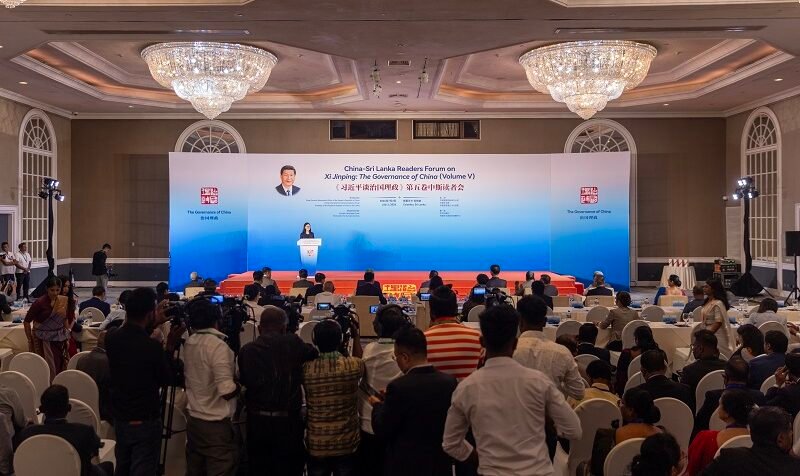
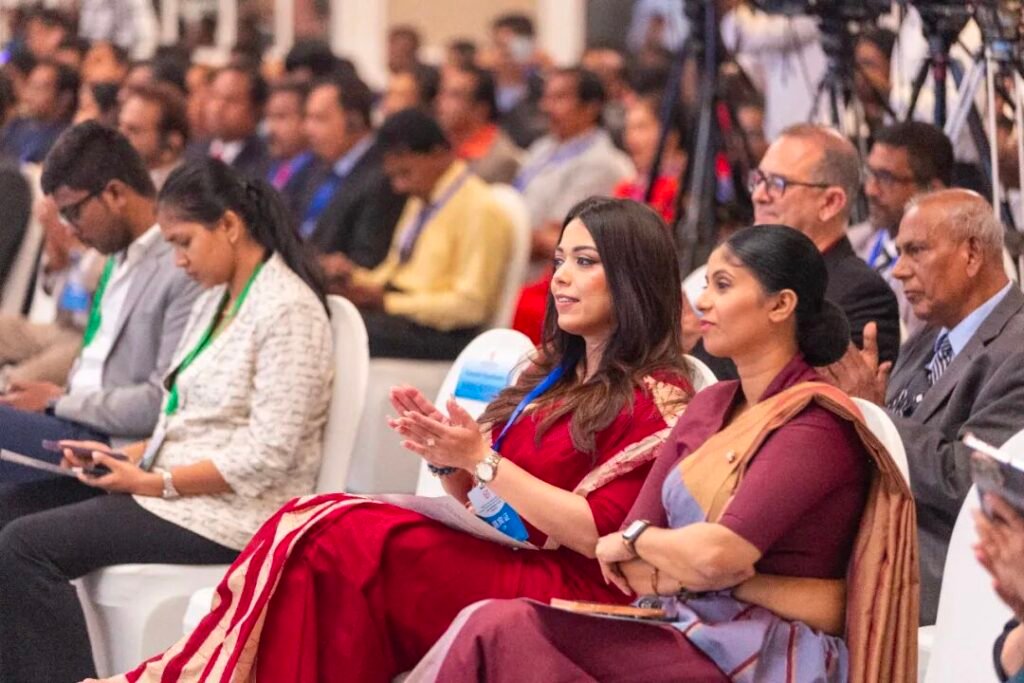
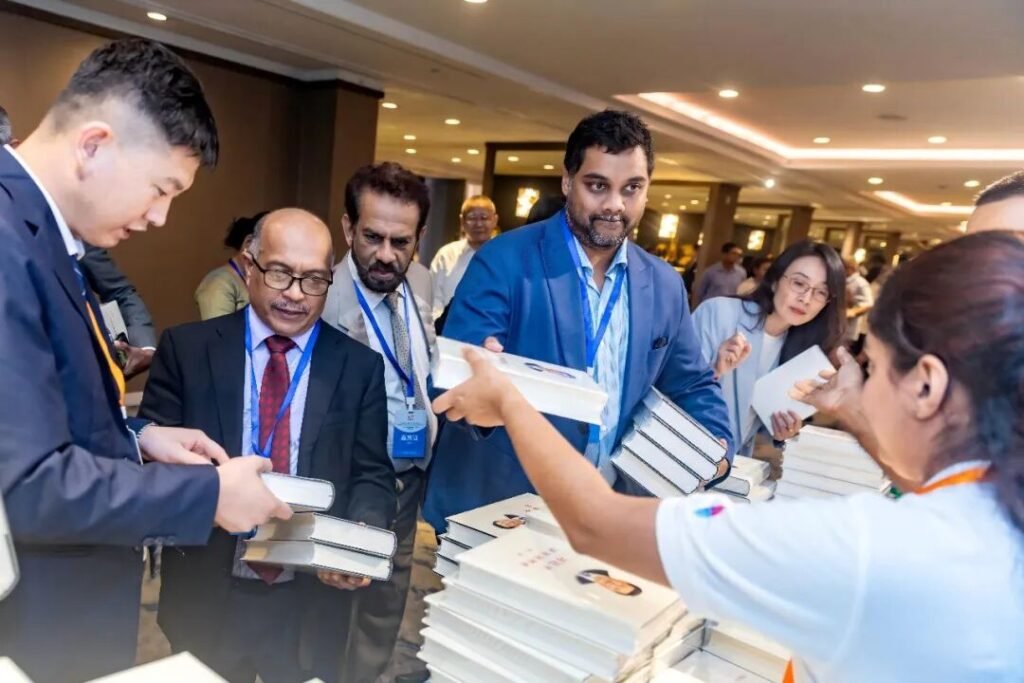
The China-Sri Lanka Readers Forum on Xi Jinping: The Governance of China (Volume V) was held on July 3 in Colombo, the capital of Sri Lanka, bringing together nearly 300 participants including government officials, business leaders, scholars, and media representatives from China and Sri Lanka.
Hu Kaihong, deputy head of China’s Central Office of Cultural and Ethical Progress, said that Xi Jinping: The Governance of China (Volume V) presents Chinese President Xi Jinping’s in-depth thinking and strategic vision for Chinese modernization. It systematically records new explorations and practices of the Communist Party of China (CPC) in uniting and leading the Chinese people to advance Chinese modernization, while elaborating on China’s vision and proposals for countries to jointly pursue modernization. The book serves as an authoritative reference for gaining a better understanding of Chinese modernization.
Jagath Wickramaratne, speaker of the Parliament of Sri Lanka, remarked that the publication of the fifth volume provides valuable perspectives into China’s vision of governance, development, innovation and international cooperation. Beyond documenting China’s development experience, the book also demonstrates China’s deep reflections on safeguarding global peace and promoting shared prosperity. Sri Lanka is willing to continue expanding exchange and cooperation in all areas with China and promote new progress of the Sri Lanka-China strategic cooperative partnership based on sincere mutual assistance and ever-lasting friendship, said Wickramaratne.
Qi Zhenhong, Chinese ambassador to Sri Lanka, noted that the book vividly documents China’s explorations and practices in pursuing modernization in the new era, and explains the CPC’s governance concepts, including putting the people first, comprehensively deepening reform, and upholding fundamental principles while breaking new ground. It provides a valuable reference for many developing countries, allowing readers to better understand the courage and innovation of a century-old major political party in responding to profound global changes while staying true to its original aspirations and founding mission.
Madhura Senevirathna, deputy minister of education and higher education of Sri Lanka, said the fifth volume presents a clear architecture for Chinese modernization, covering all fields including economic development, scientific innovation, modern education, and cultural heritage preservation. Any country that seeks to achieve modernization without losing its historical roots can draw valuable insights from the book, he said.
Yu Tao, vice president of China International Communications Group (CICG), noted that the fifth volume showcases the distinctive features, practical pathways and remarkable achievements of Chinese modernization. It serves as a guide for China and Sri Lanka to deepen mutual learning in governance. He added that as the two countries prepare to celebrate the 70th anniversary of diplomatic ties next year, the CICG will continue to cooperate with Sri Lankan institutions to promote cultural exchange and foster stronger ties between the two peoples.
Geeganage Weerasinghe, general secretary of the Communist Party of Sri Lanka, said the Communist Party of China’s achievements in developing new quality productive forces, promoting high-quality development, achieving self-reliance and strength in science and technology and building an ecological civilization fully prove that the socialist system is capable of organizing modernization more efficiently and better balancing equity and efficiency.
Photo by Duan Wei/China Pictorial
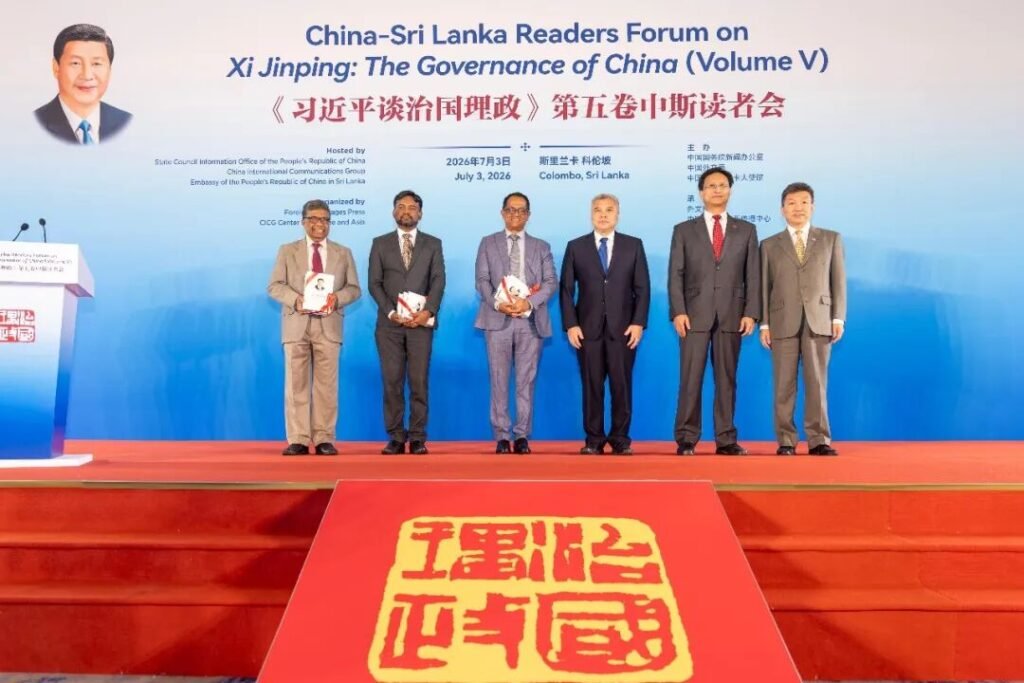
During the event, Chinese representatives presented Sri Lankan counterparts with copies of the English edition of Xi Jinping: The Governance of China (Volume V) and the Sinhalese edition of Xi Jinping: The Governance of China(Volume II).
During the case-sharing session, Sanjeewa Wimalagunarathana, president of the China Aid Training Alumni in Sri Lanka and director of the Public Information Division at the Open University of Sri Lanka, and Ruwani Munasinha, general manager of the Investment Department of China Harbour Engineering Company (CHEC) Sri Lanka Division, shared their views on the book and their experiences in high-quality Belt and Road cooperation.
Photo by Duan Wei/China Pictorial
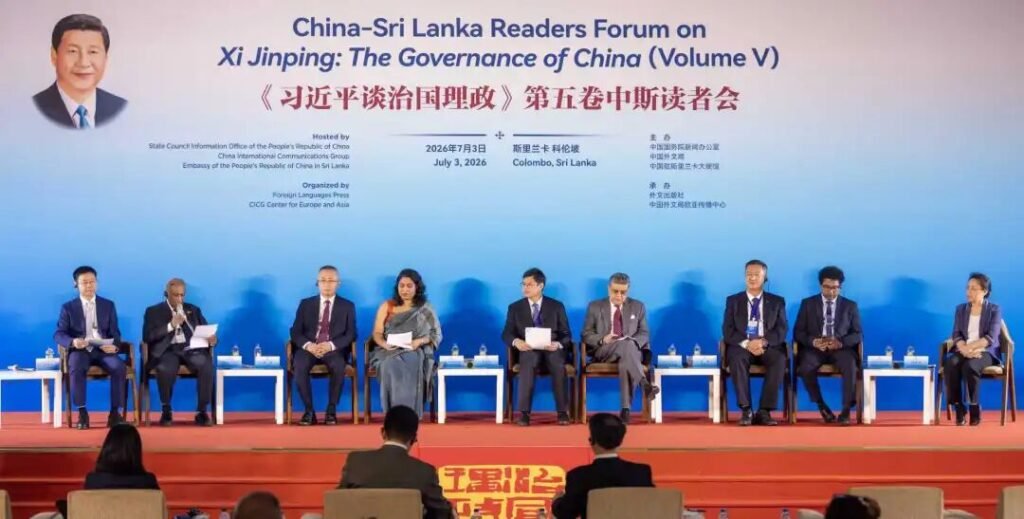
During the discussion session, experts and scholars exchanged views on topics including governance in advancing modernization, building a China-Sri Lanka community with a shared future, green development, and poverty reduction in South Asia.
Indrananda Abeysekera, president of the Association for Sri Lanka-China Social and Cultural Cooperation, noted that the practical experience in poverty alleviation and livelihood improvement outlined in the book offers valuable insights for poverty reduction efforts in South Asian countries, particularly Sri Lanka.
Yang Yu, a scholar specializing in Xi Jinping Thought on Economy and editor-in-chief of China Development and Reform News, said that opening up is a defining feature of Chinese modernization, and that China and Sri Lanka have achieved fruitful cooperation with enormous potential for future collaboration.
Piyumani Panchali Ranasinghe, senior research fellow at the Lakshman Kadirgamar Institute of International Relations and Strategic Studies, remarked that the book offers a panoramic view of China’s development blueprint and provides valuable inspiration for Sri Lanka’s modernization efforts.
Lin Minwang, professor and vice dean of the Institute of International Studies at Fudan University, said the Belt and Road Initiative has provided a solid platform for cooperation between China and Sri Lanka, with a series of landmark projects significantly improving Sri Lanka’s infrastructure and creating large numbers of local jobs.
Ahmed Jawad, director of the Pathfinder Foundation, noted that various forms of cultural exchange have helped Sri Lanka gain a deeper understanding of China while strengthening the people-to-people bonds for building a community with a shared future.
Dai Peng, general manager of the Publicity Department of the Party Committee of the Export-Import Bank of China, said that the governance wisdom embodied in the book offers valuable insights into self-driven development while creating greater opportunities for cooperation between China and Sri Lanka.
Udaya Mohan Devadas, professor at the University of Kelaniya, said China’s philosophy that “lucid waters and lush mountains are invaluable assets” resonates strongly with Sri Lanka’s development strategy, while the theory and practice of Chinese modernization presented in the new volume provide useful references for Sri Lanka’s pursuit of sustainable development.
Tian Chunxiu, deputy director of the Research Center for Xi Jinping Thought on Ecological Civilization and deputy director of the Policy Research Center for Environment and Economy under China’s Ministry of Ecology and Environment, said that the vision of building a “Beautiful China” expounded in the book offers valuable wisdom and practical solutions for countries around the world, particularly developing nations, as they explore green pathways to modernization.
Photo by Duan Wei/China Pictorial
Photo by Duan Wei/China Pictorial
The event was hosted by China’s State Council Information Office, CICG, and the Chinese Embassy in Sri Lanka, and organized by Foreign Languages Press (FLP) and the CICG Center for Europe and Asia (China Pictorial Publications). Ding Zhitao, editor-in-chief of FLP, and Lin Xihe, deputy director of the Department of International Cooperation of CICG, moderated the opening session and discussion session, respectively.
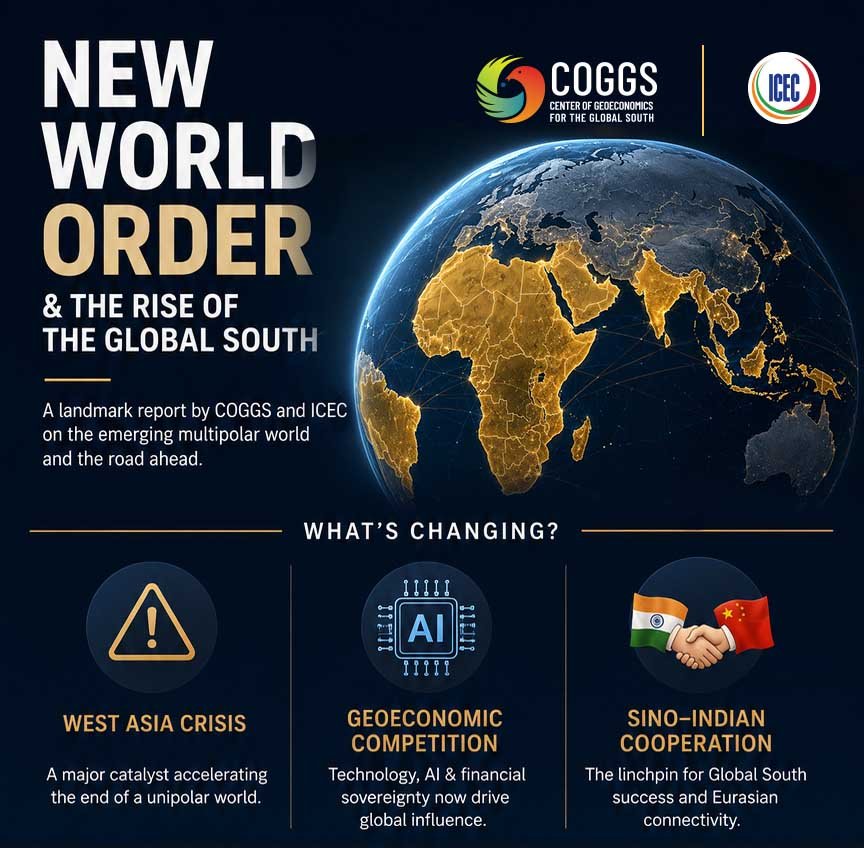
The international system is undergoing one of the most profound transformations since the end of the Cold War. The assumptions that shaped global politics for more than three decades—Western dominance, unipolar power, and a rules-based order led primarily by the United States—are increasingly being questioned by emerging realities.
Against this backdrop, the Centre of Geoeconomics for the Global South (COGGS) and the India-China Economic and Cultural Council (ICEC) convened a landmark international dialogue titled.
“The New World Order: Challenges, Transitions, and the Rise of the Global South.” Bringing together diplomats, scholars, defence analysts, economists,
and policy experts from across Asia, Europe, the Middle East, and Latin America, the discussion sought to answer a critical question: What will the next global order look like, and what role will the Global South play in shaping it?
The consensus was clear: the world is entering a multipolar era where geoeconomics, technological innovation, and regional cooperation increasingly define power.
West Asia Conflict: More Than a Regional Crisis
The ongoing conflict in West Asia has emerged as a powerful accelerator of global change. Participants argued that the crisis is not merely a confrontation involving regional actors but a structural turning point exposing the limitations of existing security arrangements and global governance mechanisms.
Several experts highlighted how the conflict has revealed vulnerabilities within traditional Western alliances while simultaneously creating space for regional actors to pursue greater strategic autonomy. Countries across West Asia are increasingly seeking diversified partnerships, balancing relations among major powers rather than aligning exclusively with one geopolitical bloc.
The discussion also underscored the growing importance of connectivity, diplomacy, and development-oriented cooperation over military confrontation. The future stability of the region, participants argued, will depend less on coercive power and more on inclusive economic development, infrastructure integration, and cooperative security frameworks.
The Shift from Military Power to Geoeconomic Power
One of the most significant themes emerging from the dialogue was the transition from a military-centric world order to one increasingly shaped by geoeconomic influence.
Power today is no longer determined solely by military alliances or battlefield capabilities. Instead, it is increasingly measured through control of supply chains, technological innovation, financial infrastructure, energy networks, artificial intelligence, and digital ecosystems.
The rise of alternative financial systems, expanding regional trade arrangements, and growing efforts to reduce dependence on the US dollar illustrate a broader restructuring of the global economy. Simultaneously, investments in renewable energy, advanced manufacturing, and digital infrastructure are creating new centres of economic gravity across Eurasia, Asia-Pacific, and parts of the Global South.
This transformation reflects a deeper reality: economic resilience and technological sovereignty have become central pillars of national power in the twenty-first century.
Multipolarity Is No Longer a Future Scenario
For many years, discussions about multipolarity remained largely theoretical. Today, they are increasingly grounded in observable realities.
The global economic centre of gravity continues to move eastward. Emerging economies are accounting for a larger share of global growth, while regional organisations and multilateral platforms are becoming more influential in shaping international outcomes.
Experts participating in the dialogue noted that China, India, the Gulf states, Southeast Asia, and several emerging powers are playing increasingly significant roles in global governance, trade, finance, and technology. Rather than a world dominated by a single power, the emerging landscape is characterised by multiple centres of influence operating simultaneously.
This shift does not necessarily imply confrontation. Instead, it presents an opportunity to build a more balanced international system where diverse voices contribute to decision-making processes.
The Global South Moves from Observer to Architect
Perhaps the most transformative development discussed during the forum was the growing agency of the Global South.
Historically, many developing nations were often viewed as passive recipients of decisions made elsewhere. That perception is rapidly changing. Countries across Asia, Africa, Latin America, and the Middle East are increasingly shaping global debates on trade, development, climate action, technology governance, and international finance.
The Global South is no longer simply responding to global events; it is actively influencing them.
Participants emphasized that development, stability, and economic cooperation must take precedence over ideological divisions. As geopolitical competition intensifies among major powers, the Global South has an opportunity to advocate for a more inclusive and equitable international order that prioritizes shared prosperity and sustainable development.
Why India-China Relations Matter to the Future World Order
Among all the themes discussed, none generated greater attention than the future of India-China relations.
Despite geopolitical tensions and persistent trust deficits, experts repeatedly stressed that cooperation between Asia’s two largest economies remains indispensable for a stable multipolar world.
India and China collectively represent more than one-third of humanity. Both are central to global supply chains, technological innovation, renewable energy transitions, and economic growth. Their ability to manage differences while expanding areas of cooperation will significantly influence the trajectory of the twenty-first century.
Economic data already points to substantial interdependence. Growing trade volumes and shared interests within platforms such as BRICS indicate that pragmatic engagement remains possible despite strategic disagreements.
Participants argued that major Eurasian connectivity projects, green technology transitions, and broader Global South initiatives will achieve their full potential only when India and China establish greater strategic trust and cooperation.
Beyond the End of History: Entering the End of Ideology
The dialogue concluded with a powerful reflection on the nature of contemporary global transformation.
The post-Cold War belief that history had reached its final ideological destination has clearly faded. What is emerging instead is a more complex world where countries increasingly prioritize national interests, development objectives, economic resilience, and strategic autonomy over rigid ideological alignments.
The emerging international order resembles a vast and unfinished puzzle. No single country possesses all the pieces. No single model offers all the answers.
The challenge for policymakers, scholars, and leaders across the Global South is not simply to react to change but to shape it.
Conclusion: A Historic Opportunity for the Global South
The transition toward a multipolar world is no longer speculative—it is underway.
The defining questions are no longer whether the global order will change, but how rapidly it will evolve and who will influence its direction.
For the Global South, this moment presents an unprecedented opportunity. By strengthening regional cooperation, investing in technological and financial sovereignty, promoting inclusive development, and supporting constructive diplomacy, developing nations can help build a more balanced and representative international system.
The rise of the Global South is not merely a geopolitical trend. It is one of the defining forces shaping the future of global governance, economic development, and international stability.
As the world navigates this historic transition, the choices made today will determine whether the emerging New World Order becomes a source of greater fragmentation—or a foundation for a more equitable and cooperative future.
The year 2025 marks the 75th anniversary of the establishment of diplomatic relations between China and India. Guided by the leaders of both countries and supported by the joint efforts of all sectors in China and India, the two sides have welcomed steady and healthy development of bilateral relations through high-level meetings, institutional dialogue, improved connectivity, and expanded cultural interactions. Recently, the Center for Europe and Asia (China Pictorial Publications) of China International Communications Group (CICG), the Institute of International Studies at Fudan University, and the India China Economic and Cultural Council (ICEC) jointly released the Top 10 News Stories on China-India Relations in 2025.
Chinese and Indian Leaders Exchange Congratulatory Messages, Advancing the Healthy and Stable Development of Bilateral Relations
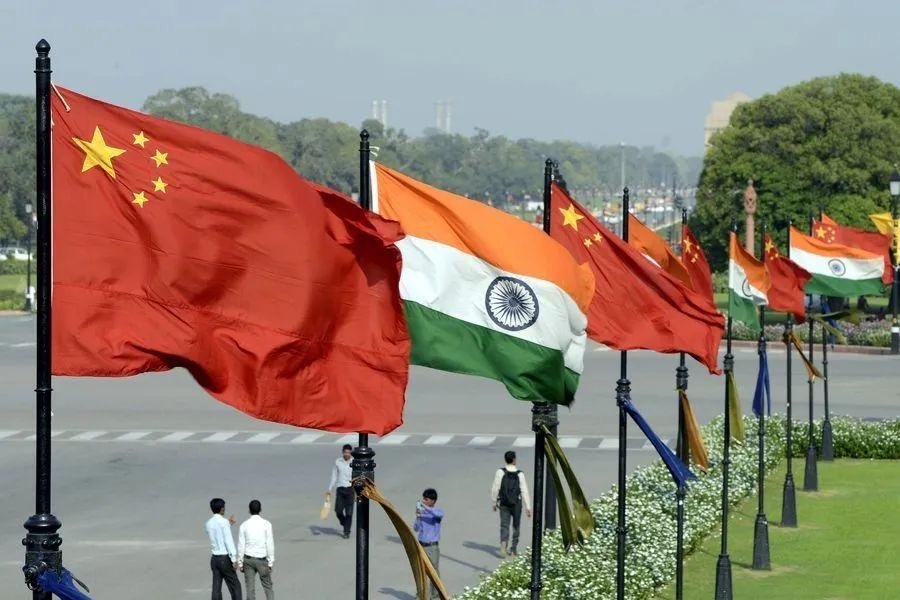
Chinese and Indian national flags flutter side by side at the Raisina hills in New Delhi, India. (Xinhua file photo)
On April 1, Chinese President Xi Jinping and Indian President Droupadi Murmu exchanged congratulatory messages on the 75th anniversary of diplomatic relations between the two countries.
Xi said he stands ready to work with Murmu to take the opportunity presented by the anniversary of ties to enhance strategic mutual trust, strengthen exchanges and cooperation in various fields, deepen communication and coordination in major international affairs, jointly safeguard peace and tranquility in the China-India border area, push forward a sound and steady development of bilateral relations, and contribute to world peace and prosperity.
For her part, Murmu remarked that India and China are two major neighboring countries home to one-third of the world’s population, noting that a stable, predictable, and friendly bilateral relationship will benefit both countries and the world. She proposed to take the opportunity of the 75th anniversary of diplomatic ties to jointly promote the sound and steady development of India-China relations.
Congratulatory messages on the occasion by leaders of the two countries reflect their willingness to view bilateral relations from a strategic and long-term perspective, which sent a clear signal to the international community that both sides seek to manage differences, enhance mutual trust, advance exchanges and cooperation, and contribute to global peace and prosperity.
Tianjin Meeting Gives New Momentum to Bilateral Relations
Chinese President Xi Jinping meets with Indian Prime Minister Narendra Modi in Tianjin, northern China, August 31, 2025. Modi was in China to attend the 2025 Shanghai Cooperation Organization (SCO) Summit. (Photo by Xie Huanchi/Xinhua)
On August 31, Chinese President Xi Jinping met with Indian Prime Minister Narendra Modi in Tianjin during the 2025 Shanghai Cooperation Organization (SCO) Summit. It was the Indian Prime Minister’s first visit to China in seven years.
Noting that this year marks the 75th anniversary of China-India diplomatic ties, Xi said the two countries need to view and handle the relationship from a strategic and long-term perspective, pursue a further improvement of ties from the Tianjin meeting onward, and promote steady and sustained progress in bilateral ties. Xi called on the two countries to strengthen strategic communication, deepen mutual trust, expand exchanges and cooperation to achieve mutual benefits and win-win outcomes, accommodate each other’s concerns, get along in peace and harmony, and strengthen multilateral coordination to safeguard shared interests.
Noting that India and China are partners, not rivals, and that the consensus between the two countries far outweighs their disagreement, Modi said India is ready to view and develop bilateral ties from a long-term perspective. He added that India-China cooperation will make the 21st century a genuine “Asian century” and the two sides joining hands will increase the strength of multilateralism in international affairs.
The meeting between the two leaders sent a positive and stabilizing signal amid the complex international and regional landscape. It helped reinforce expectations for bilateral relations, restore political mutual trust, and create important conditions for the two countries to pursue more active cooperation in areas such as trade and economic ties, cultural exchange, regional governance, and multilateral affairs.
Institutionalized Meetings Reach Consensus on Advancing Practical Cooperation
The 24th Round of Talks Between the Special Representatives of China and India on the Boundary Question in New Delhi, August 19, 2025. (Photo courtesy of the website of Chinese Foreign Ministry)
The 24th Round of Talks Between the Special Representatives of China and India on the Boundary Question was held in New Delhi on August 19. China’s Special Representative Wang Yi and India’s Special Representative Shri Ajit Doval conducted comprehensive, in-depth, and fruitful communication on the China-India boundary question and bilateral relations. The two sides exchanged views on early harvests of boundary negotiations, reaffirming their commitment to explore fair, equitable, and mutually acceptable solutions.
In January and June, Chinese Vice Foreign Minister Sun Weidong and Indian Foreign Secretary Vikram Misri held meetings of China-India Vice Foreign Minister-Foreign Secretary Dialogue in Beijing and New Delhi, respectively, focusing on promoting implementation of common understandings reached between Chinese and Indian leaders at their meeting in Kazan and discussing concrete measures to improve and develop China-India relations.
In March and July, China and India held the 33rd and 34th Meeting of Working Mechanism for Consultation and Coordination on Border Affairs in Beijing and New Delhi, respectively. The two sides agreed to maintain communication through diplomatic and military channels to uphold peace and tranquility in the border areas.
Trade Volume Reaches New Heights, Boosting Global South Cooperation
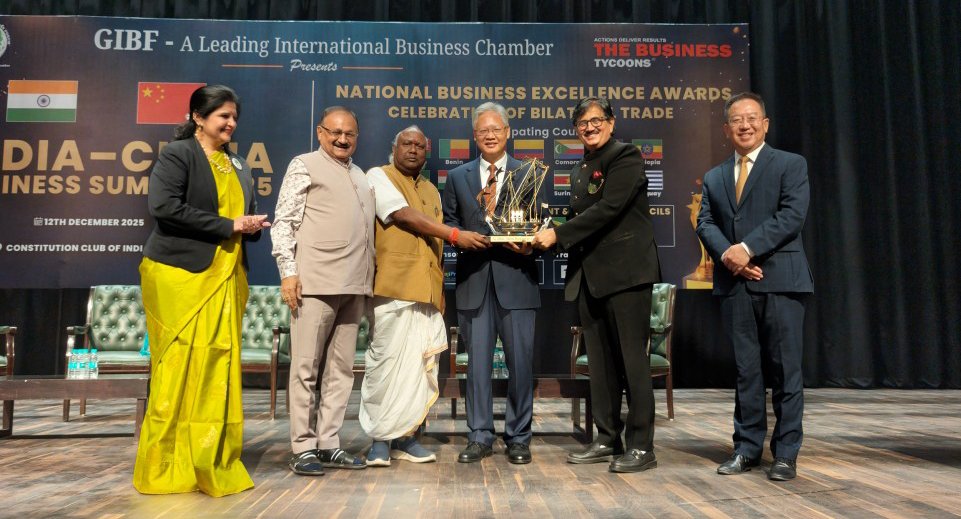
On December 12, 2025, Chinese Ambassador to India Xu Feihong attended the India-China Business Summit 2025 hosted by the Global India Business Forum (GIBF) and delivered a keynote speech. (Photo courtesy of the website of Chinese Embassy in India)
In 2025, China-India bilateral trade continued to grow. According to the General Administration of Customs of China, total trade between the two countries reached US$127.6 billion from January to October 2025, an increase of 11 percent year on year. In August, China and India reached an agreement to resume border trade that had been suspended since 2020. In December, the India-China Business Summit 2025 was held in New Delhi. At the event, Chinese Ambassador to India Xu Feihong stated that the two countries enjoy broad prospects for aligning development strategies. He remarked that both China and India benefit from strengthening mutually beneficial cooperation, improving the global economic governance system, and promoting cooperation and development for the Global South. Against a backdrop of slowing global economic growth and the rise of unilateralism and protectionism, China-India economic and trade cooperation has become an important stabilizing force for economic development in Asia and beyond.
Resumption of Direct Flights Enhances Connectivity Between the Two Countries
On October 27, an IndiGo flight carrying 176 passengers landed at Guangzhou Baiyun International Airport in Guangdong Province. (Photo courtesy of Guangdong Radio and Television)
On October 27, direct passenger flights between the Chinese mainland and India officially resumed. The first post-resumption flight departed from Kolkata with 176 passengers and flew three hours and 45 minutes before landing at Guangzhou Baiyun International Airport at 3:49 a.m. China’s Ministry of Foreign Affairs remarked that the resumption of direct flights represents the latest progress in implementing the important consensus reached by the leaders of the two countries at their Tianjin meeting and is a positive step toward facilitating friendly exchange between the more than 2.8 billion people of the two nations. India’s Ministry of External Affairs noted that the resumption of direct flights will further facilitate people-to-people contact between India and China.
Resumption of Direct Flights Enhances Connectivity Between the Two Countries
On October 27, an IndiGo flight carrying 176 passengers landed at Guangzhou Baiyun International Airport in Guangdong Province. (Photo courtesy of Guangdong Radio and Television)
On October 27, direct passenger flights between the Chinese mainland and India officially resumed. The first post-resumption flight departed from Kolkata with 176 passengers and flew three hours and 45 minutes before landing at Guangzhou Baiyun International Airport at 3:49 a.m. China’s Ministry of Foreign Affairs remarked that the resumption of direct flights represents the latest progress in implementing the important consensus reached by the leaders of the two countries at their Tianjin meeting and is a positive step toward facilitating friendly exchange between the more than 2.8 billion people of the two nations. India’s Ministry of External Affairs noted that the resumption of direct flights will further facilitate people-to-people contact between India and China.
India Resumes Tourist Visas for Chinese Nationals, Facilitating People-to-People Exchange
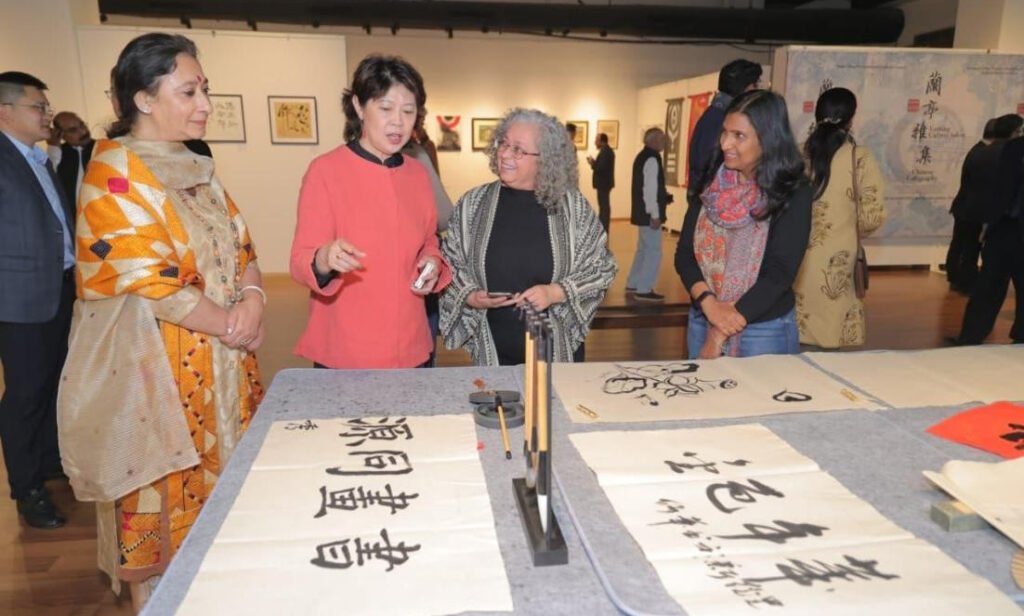
The “Lanting Culture Salon” Chinese Calligraphy and Painting Exhibition in New Delhi, December 14, 2025. (Photo courtesy of the website of Chinese Embassy in India)
The Indian Embassy in China announced that India would open tourist visa applications to Chinese citizens from July 24. This marked the first time in five years that India resumed issuing tourist visas to Chinese nationals following the suspension in 2020. In late November, the Indian government issued a global notice to its embassies and consulates announcing full resumption of tourist visa services for Chinese citizens. In December, India simplified procedures and expedited issuance of business visas for Chinese professionals. Overall, facilitation of personnel exchange between the two countries has continued to improve.
Resumption of Indian Pilgrimages Sustains Dialogue Between Civilizations
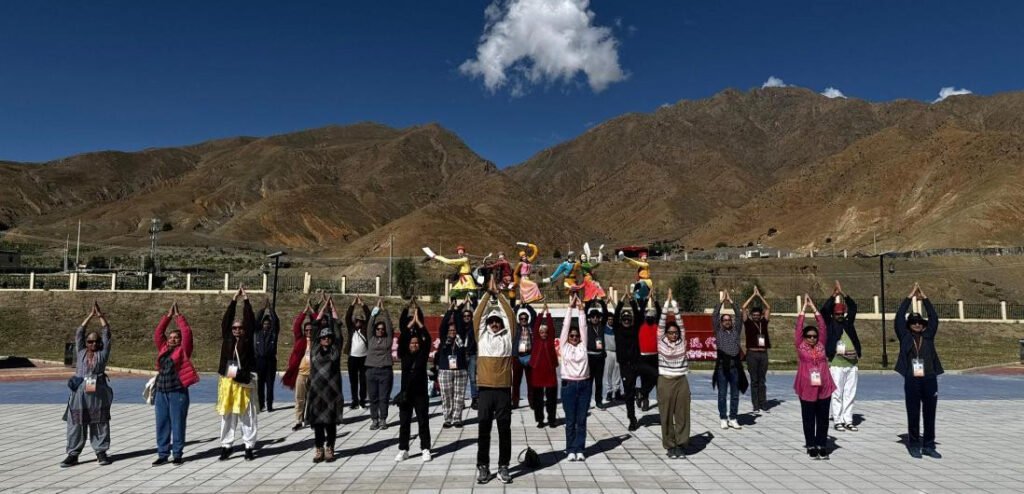
In June 2025, Indian pilgrimage activities around Mount Kailash and Lake Manasarovar in China’s Xizang Autonomous Region resumed. Pilgrims from the first group traveling via the Nathu La Pass after resumption practiced yoga in Bailang County. (Photo courtesy of the X account of Randhir Jaiswal, spokesperson of Indian Ministry of External Affairs)
Beginning in June, pilgrimages by Indian devotees to Mount Kailash and Lake Manasarovar in China’s Xizang Autonomous Region officially resumed after a five-year suspension. Chinese Ambassador to India Xu Feihong remarked that the resumption of pilgrimages is an important initiative taken by China to improve relations between the two countries, which will help enhance mutual understanding and friendship between the two peoples, promote people-to-people and cultural exchange, and inject new impetus into the improvement and development of bilateral relations.
Close Cooperation on New Energy Drives Global Green Development
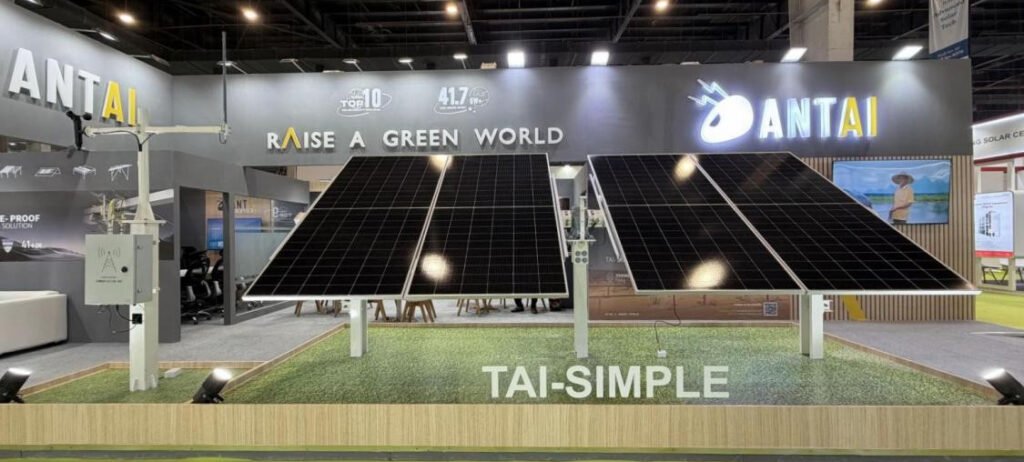
From October 30 to November 1, the Renewable Energy India Expo 2025 was held in Greater Noida, India. Chinese company Antai Solar showcased its photovoltaic equipment at the expo.
According to the Federation of Automobile Dealers Associations, Chinese-linked electric vehicle (EV) brands, including BYD, JSW-MG, and Volvo/Geely accounted for nearly a third of India’s passenger EV market as of October 2025. China Automotive New Energy Technology secured a 1 GWh order from India’s power grid and signed a memorandum of cooperation with IndiGrid, an Indian power sector infrastructure investment trust, covering supply of 5 GWh of energy storage system products for the 2026–2027 period. In addition, China’s LONGi Green Energy Technology (Hong Kong) reached an agreement with India’s Inox Solar to supply 5 GW of solar modules to the Indian market. These developments reflect growing momentum of China-India cooperation in the new energy sector.
Diverse People-to-People Exchange Strengthens Cultural Ties
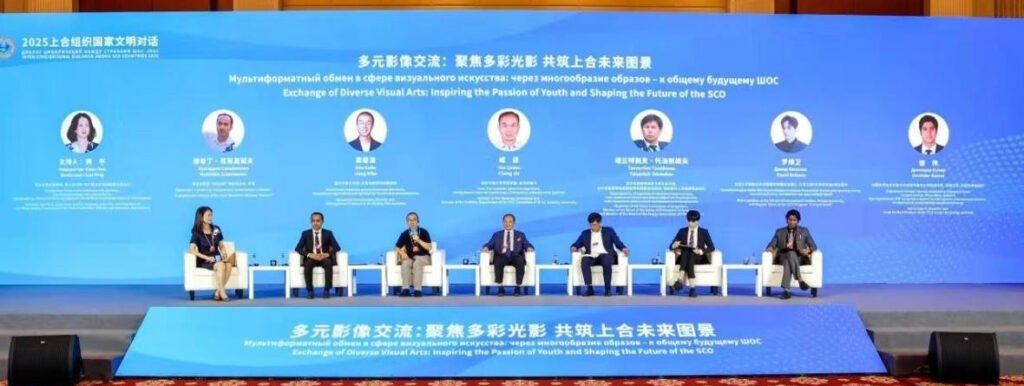
On July 23, the Inter-Civilizational Dialogue among Shanghai Cooperation Organization (SCO) Countries 2025 was held in Tianjin, China. Over 300 participants from government departments, think tanks, and cultural, artistic, educational, and media sectors of SCO countries attended the event. (Photo by Xu Xun/China Pictorial)
In 2025, cultural exchange between China and India gradually regained momentum amid stabilized and improved bilateral relations. In March, a ten-member Indian classical music delegation led by celebrated sitarist Purbayan Chatterjee and flautist Rakesh Chaurasia toured Beijing and Shanghai. In April, a delegation of senior journalists and editors from seven Indian mainstream media outlets including The Times of India, India Today, and The Statesman visited Hunan and Fujian provinces. In June, the Consulate General of India in Shanghai commemorated the 164th birthday of Rabindranath Tagore, Indian poet and philosopher, with a vibrant cultural celebration. In July, the Global Civilizations Dialogue Ministerial Meeting and the Inter-Civilizational Dialogue among SCO Countries 2025 were held in China, with the participation of prominent Indian cultural figures. In October, the Global Governance Roundtable for SCO Countries 2025 took place in Beijing, attended by representatives from Indian think tanks. Through dialogue and cooperation in areas such as arts, media, civilizational exchange, and governance, both sides continued to promote people-to-people exchange.
China-India Youth Dialogue Carries the Cause of Friendship Forward
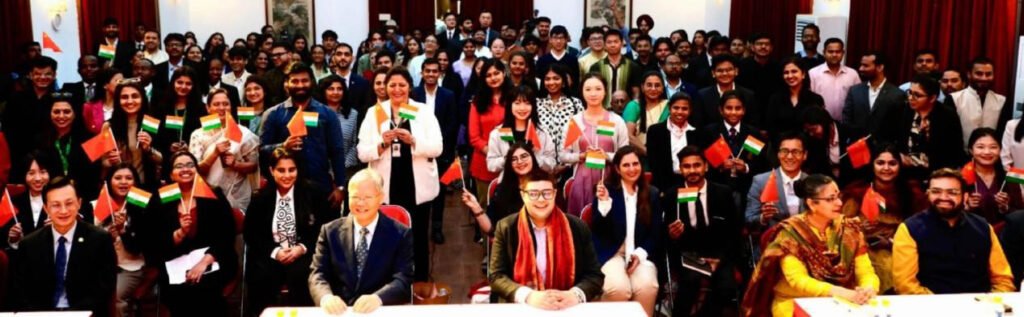
On February 25, 2025, the Chinese Embassy in India and the Confederation of Young Leaders of India (CYL) co-hosted the third China-India Youth Dialogue. Over a hundred representatives of youth, media, and think tanks from the two countries attended the event. (Photo courtesy of the website of Chinese Embassy in India)
On February 25, the Chinese Embassy in India and the Confederation of Young Leaders of India (CYL) co-hosted the third China-India Youth Dialogue, attended by more than 100 representatives of youth, media, and think tanks from both countries. The representatives exchanged views on China-India cooperation in fields of politics, economics, culture, education, and work under the framework of the SCO. In his speech, Chinese Ambassador to India Xu Feihong expressed hope that the youth of two countries will be promoters of bilateral relations, standard bearers of China-India friendship, and envoys of the correct perceptions of China and India, contributing wisdom and strength to China-India ties. He encouraged youth to participate in people-to-people exchange and mutual learning among civilizations through concrete action under the framework of the SCO. Himadrish Suwan, chairman of the CYL, said that India-China Youth Dialogue is a flagship Track II engagement between two countries, which has been well received at the Indian government. As two ancient civilizations and emerging global powers, he added, China and India should work towards a stable, predictable, and resilient relationship. He noted that the youth bear a historical responsibility.
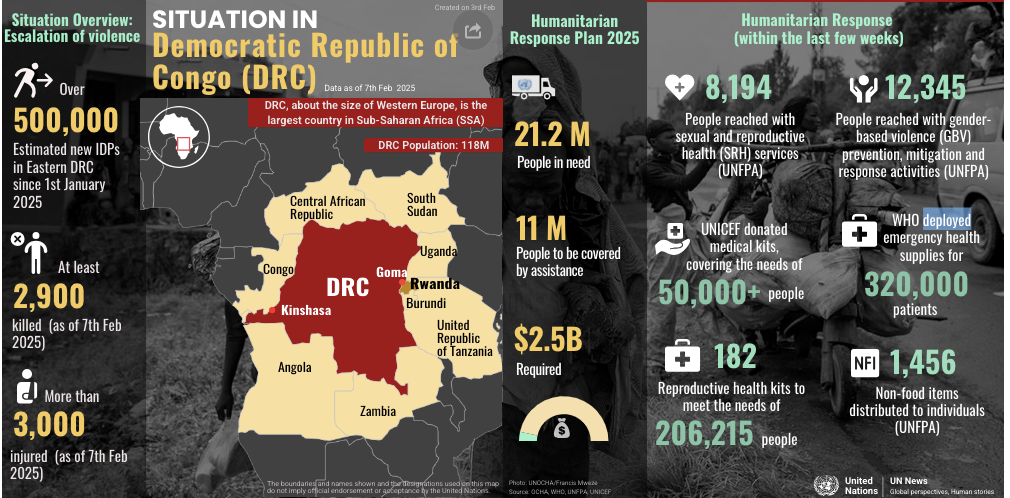
UPON REACHING WHITE HOUSE, Democratic Republic of Congo’s President Felix Tshisekedi is set to sign a deal with his Rwandan counterpart Paul Kagame, aimed at securing peace in eastern Congo on December 4, 2025. The ongoing peace-talks between Democratic Republic of Congo and Rwanda represent a critically high-impact, yet fragile moment in the region’s decades-long conflict. While facilitated by global powers and driven by strategic economic interests, the viability of the deal is currently undercut by persistent military hostilities, deep seated animosity, mutual distrust, and unresolved conditionalities concerning armed groups and troop withdrawals. The Washington-brokered peace initiative, also involving Qatar, has been characterized by powerful geopolitical and economic motivations that arguably give this particular attempt at reconciliation more global weight than efforts made earlier.
Democratic Republic of Congo, the second-largest country on the continent is immensely rich in critical minerals ranging from cobalt, gold, copper, and coltan. These elements highly are essential for the global production of electronic goods, electric cars, solar panels, and AI data farms. Needless to say, the US has commercial interests in DRC.
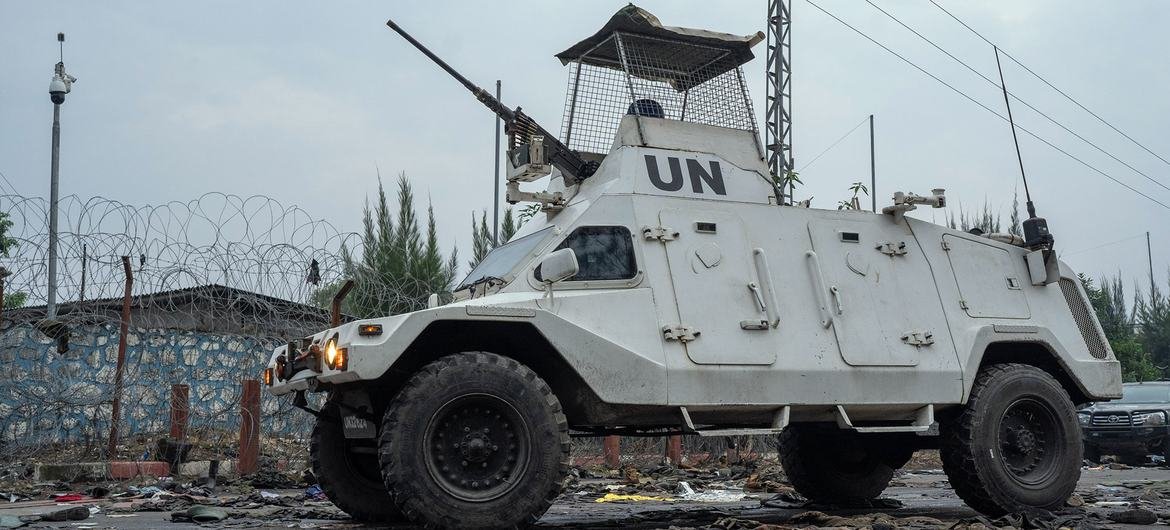
Courtesy: UN News MONUSCO/Aubin Mukoni UN peacekeepers patrol in Goma
The peace deal, which aims to give the US increased access to Congolese natural resources, is seen as a means to incentivize US investment in the country. On the other hand, the US effort as a strategic move to push back against China’s fast march in the mineral market across Africa.
The economic dimension has generated significant controversy, particularly regarding Europe. DRC has accused European Union of demonstrating a “double standard” by making a 2024 minerals deal with Rwanda. This deal was inked aiming at boosting Europe’s supply of raw materials for hi-tech industries, such as electric car batteries and microchips. The DRC Foreign Minister, Thérèse Kayikwamba Wagner, argued the memorandum of understanding with Rwanda is “void of any credibility” because Rwanda has been accused of siphoning off Congolese resources extracted through brutal conditions of forced labour, including child labour for the purpose of export. The EU has imposed sanctions on certain individuals and a Rwandan gold refiner for fueling the conflict and violating DRC territory, yet has been urged by the DRC to levy much stronger sanctions, similar to those imposed against Russia for its invasion of Ukraine.
The Peace Framework
The peace accord was initially scheduled to be signed by the foreign ministers of the DRC and Rwanda in Washington DC on June 27th, 2025 following three days of talks between delegates. The draft of the peace deal includes specific language on the prohibition of hostilities, respect for territorial integrity, and the disarmament of armed groups. The treaty further contains provisions for the return of refugees with the support of the UN refugee agency UNHCR, and increasing humanitarian aid. A final agreement will be signed by the Presidents of both nations in Washington. Despite subsequent accusations of delay, the DRC presidency scheduled the signing of the final peace deal for December 4th in the US capital. In addition to the US, Qatar, and the African Union are slated to supervise the process, while UN-sponsored peacekeepers are expected to continue their mission to protect civilians.
Despite the official signing of the agreement in June by the DRC’s chief diplomat, the implementation has faltered due to a cycle of mutual recrimination, military activity, and some conditional demands.
Courtesy: UN News
Rwanda’s Position and Demands
Rwandan President Paul Kagame accused the DRC of shelving the signing of the US-mediated peace deal by setting ‘different conditions’ since the June agreement. Rwanda maintains that it will only withdraw its troops from Eastern DRC after the FDLR ( one of the largest foreign armed groups operating in the territory of the DRC) militia is disarmed. Rwanda accuses the DRC of continuing to support the FDLR (a militia group formed in 2000 by members of ex-FAR and Interahamwe who were responsible for Rwandan genocide). While the DRC Foreign Minister acknowledged that some individuals within the Congolese military (FARDC) might support the FDLR, she asserted that this is not ‘state policy,’ in contrast to the alleged presence of about 4,000 Rwandan troops on DRC sovereign territory, which the DRC considers a blatant state policy violation.
DRC’s Position and Accusations
The DRC Minister of Communication, Patrick Muaya, dismissed the accusation of delay as false and instead blamed Rwanda for refusing to pull its troops out of Eastern DRC. The DRC accuses the Rwandan Defence Force (RDF) of fighting alongside the M23 rebels. A group of UN experts reported that up to 4,000 Rwandan troops were fighting alongside M23 and that the Rwandan military was in ‘de facto control of M23 operations’. The M23 rebels have reportedly seized swathes of DRC territory, several major cities, and are accused of establishing and consolidating a parallel administration.
Challenges to Implementation and Concerns over Justice
The US and Qatar brokered peace process faces significant skepticism and operational challenges and it further reflects the failure of many previous attempts at reconciliation where agreements were simply ignored on the battlefield.
Fights are still going in Eastern DRC despite the peace agreement framework. The hostilities have resulted in a humanitarian crisis, claiming thousands of lives since 2021 and forcing thousands of people to flee their homes. According to the UN, over 7.8 million people are internally displaced in the Eastern DRC region.
M23 Non-Compliance and Impunity:
A crucial challenge is the commitment of the M23. DRC demands the full restoration of state authority and will not accept a prolonged presence of the force. M23 is accused of blocking a UN verification team from operating effectively in occupied areas, hindering investigations into human rights abuses. Furthermore, negotiations over a prisoner swap are stalled because the DRC government refuses to mistake the swap process with impunity for M23 members who committed atrocities like massacres, raping, and looting. DRC maintains that sustainable peace cannot be built on a foundation of impunity.
DRC Foreign Minister has voiced doubt regarding Rwanda’s sincerity, noting that Rwanda still has thousands of troops illegally on DRC territory, ‘looting,’ ‘killing,’ and ‘raping’. She expressed greater trust in the levers and pressure points of the mediators US and Qatar to ensure accountability, noting that a lack of accountability caused previous deals to fail.
The peace talks agreement, despite being termed as historic, has been met with skepticism within DRC, with a former Congolese president calling it ‘nothing more than a trade agreement.’ Furthermore, there is concern that if the process fails to include nationwide buy-in, particularly from local groups, and is confined to deals among political elites, it will not work effectively, as past deals have led to corruption and continued instability. The two presidents presence at White House will reshape the regional politics. Under the pressure, it is expected the two nations will abide by the deal and have lasting impacts in Africa, a sanctuary of armed rebels and reformers.
IN ORDER TOget the Central Asian nations out of the clutch of Russia and China, the European Union has been pulling up its socks and contemplating the best ways to engage with the region. The Third European Union-Central Asia Economic Forum was convened in Tashkent, Uzbekistan, on November 26, 2025, followed by the EU-Central Asia Summit in Samarkand. The forum hosted business leaders, investors, and government representatives from over 32 countries, where the EU contingent was led by EU Commissioners Jozef Síkela and Marta Kos.
EU–Central Asia Economic Forum in Tashkent warmed up EU–Central Asia economic ties, with six cooperation agreements worth nearly €100 million signed across irrigation, ecology, digital geodata, and security, framing 2025 as “The Year of Europe” in the region. The EBRD highlighted its cumulative €21 billion already invested in 1,227 projects in Central Asia, while a new €3 million EU–EBRD agreement targets sustainable mining of critical raw materials to feed Europe’s green transition.
The Forum’s inking of six major €100 million deals , ranging from DATA4CRM (€7.5M) for investor-attracting geodata modernization, SECURE CRM (€3M) and GROW CRM (€3M) for transparent critical raw materials chains, the €48.8M Aral Sea restoration, to BOMCA (€12M) and CADAP (€18M) for border security and anti-drug efforts reflects a commitment of EU.
Central Asia is comprised of five post-soviet states Kazakhstan, Kyrgyzstan, Tajikistan, Turkmenistan, and Uzbekistan, where as EU remains a 27-member European club, after UK’s exit from the bloc. EU–Central Asia Economic Forum was considered a precondition for success for both the EU’s presence in the region and for Central Asia’s desire for increased business with Europe. Central Asian Development projects are subjected to create a sustainable future, generate jobs, establish value chains, and generate wealth in the region. The drives are simultaneously intended to increase the economic security and resilience for Europe.
The economic partnership is currently at a pivotal juncture, with discussions focusing on strengthening regional connectivity and exploring sustainable investment opportunities. The habitat of 80 million Central Asia is readying herself to accommodate 100 million people by 2050. The central asian nations have shown great camaraderie on regional and international issues, despite internal tussles back home.
The economic engagement between the EU and Central Asia is based upon couple of factors ranging from bilateral commerce, particularly with Uzbekistan, and substantial financial allocation from European institutions.
The EU maintains its position as Uzbekistan’s largest investor. In 2024, the European Bank for Reconstruction and Development (EBRD) allocated a total of two billion euros to Central Asia. Of this figure, 85 million euros were allocated specifically to Uzbekistan.
GDP of the Central Asian nations. Data: IMF. Chart: The Times of Central Asia.
EU is one of Central Asia’s primary trading partners, accounting for 24.7% of the region’s combined foreign trade in 2024, with overall trade volume reaching approximately €54 billion ($60 billion ). EU imports from Central Asia surged 68% in 2024, dominated by commodities like crude oil, gas, metals, and cotton fiber, especially from Kazakhstan, where EU trade hit €45 billion and Kazakhstan sends 37% of its exports to the EU—while EU exports to the region, mainly machinery, transport equipment, and manufactured goods, dipped slightly by 5%. Key frameworks include the Enhanced Partnership and Cooperation Agreement (EPCA) with Kazakhstan since 2020, Generalized Scheme of Preferences (GSP/GSP+) for Kyrgyzstan, Tajikistan, and Uzbekistan, plus recent €12 billion Global Gateway investments in transport (i.e Middle Corridor), critical raw materials, green energy, and digital connectivity, alongside €100 million in new deals from the 2025 Tashkent Forum.
European Bank for Reconstruction and Development (EBRD) has emerged as the leading institutional investor in Central Asia. It has provided over €2.26 billion to 121 projects in 2024 alone and mobilizing more than €3 billion for the region’s real economy, with a strong focus on private-sector development, sustainable infrastructure, and green transition.
Whereas Brettonwoods institution IMF usually focuses macroeconomic stabilization, balance-of-payments support, and policy advice through instruments and capacity-building platforms (such as CCAMTAC center in Almaty), EBRD is primarily a project-based lender and equity investor designed to boost market-oriented economies and crowd in private capital. World Bank’s Central Asia portfolio, on the other hand, underscoreslarge-scale public-sector investments and policy reforms in areas such as social services, connectivity, and climate resilience, operating one of its largest programs globally in the region, while Asian Development Bank (ADB) positions itself as a regional development financier with a strong focus on infrastructure, regional integration, and knowledge support.
EBRD’s niche lies in its deep local presence, its role as the largest green lender in Central Asia. About 58 percent of EBRD 2024 financing supported green economy projects and its capacity to work directly with firms and municipalities, often co-financing alongside World Bank and ADB and complementing IMF policy conditionality rather than competing with it. This makes the EBRD a critical bridge between macro-level reform agendas driven by the IMF and World Bank and the micro-level, commercially oriented investments needed to embed market disciplines, support SMEs, and operationalize the region’s shift toward sustainable, diversified growth.
As the European nations are finding alternatives of Russia and China for essential energy supplies, Central Asia appears to be the perfect fit. The forum has positioned Central Asia as a multipolar transit hub via Trans-Caspian routes whilegenerating local jobs and green reforms.
[ The Thinker: Victor Gao is a notable Chinese legal scholar, businessman, and geopolitical commentator known for his extensive work on China’s rise and global strategic affairs. He is the Vice President of Center for China and Globalization, a Beijing based think tank. He has authored, co-authored, and edited over 25 books in English and Chinese, advocating that China’s modernization and global engagement represent a restoration of historical balance rather than domination, with a focus on sovereignty, mutual development, and non-Western narratives of democracy and human rights.
His ideas emphasize China’s firm stance on national unity concerning Taiwan, Tibet, and Xinjiang, criticize Western liberal universalism, and position China as a pragmatic force in a multipolar world fostering cooperation in Africa, Latin America, and Asia. Gao was a English interpreter for the Chinese premier Deng Xiaoping.]
Thinker Victor Gao, Irina Sarenko, Professor of Russian Academy of Sciences, Mohammad Saqib, Convenor of COGGS in a TV Panel. [Courtesy: CGTN Screengrab ]China’s View of America and the Dynamics of Misunderstanding and Decoupling
China, according to Professor Gao views the United States through a lens of economic engagement, policy critique, and strategic caution, particularly regarding Washington’s approach to global trade and re-industrialisation efforts.
The fundamental Chinese view is that the United States is currently pursuing economic policies, specifically tariffs whichare misleading the citizen of America. In a podcast with Indonesian podcaster Gita Wirjawan, Professor Gao opines that US presidents lack the “courage and the decency and the honesty to tell the American people that the tariffs they are talking about are fundamentally going to be paid by the American people”. He argues that these tariffs “are an additional tax against the American people”. Furthermore, he critiques the idea of “fair trade” without “free trade,” stating plainly: “there will be no fair trade without free trade”.
On re-industrialisation, China presents itself as the definitive expert, highlighting its success since 1978. If the US is “really serious about bringing back manufacturing jobs,” President Trump “needs to talk to China”. China is the world’s “most important industrialized country,” capable of producing over 200 different items recognised by the UN system, with production normally constituting “more than 50% of the global production”. However, for the US to achieve re-industrialisation, Professor Gao advises necessary preconditions, including ensuring US power generation is “minimally doubled if not increased by three times,” and that American container ports become “very very efficient”. The implication is that the US has not done its “solid homework” necessary for success.
China firmly rejects the concept of ‘decoupling.’ Attempting to decouple the economies is likened to “talking about decoupling the earth from the moon”. Should such an attempt succeed, “mankind will be hit with a greater disaster and peace may disappear and war may be initiated”. Decoupling risks plunging mankind into a crisis, forcing countries into “opposing blocks meant for war rather than peace”. Furthermore, decoupling may severely impact the US’s own ‘national defense strategy,’ especially regarding access to ‘the rare earth that China is providing,’ which is necessary for advanced military technology.
Geopolitically, the US is seen as susceptible to ‘overreach,’ a concept drawn from the historical analysis of great empires. China observes that the US, after attaining primacy post-Cold War, has ‘fought one war after another’, spending trillions in conflicts like Iraq and Afghanistan. When the US overreaches, it risks its “own demise”. China sees the US’s complete support for Israel amid the Gaza crisis as a contemporary example of overreaching ‘to do the wrong thing’, denying the ‘basic rights of the Palestinian people in their own homeland’. Professor Gao urges the US to use its ‘tremendous amount of might’ to be a “noble leader” that champions “philosophy use morality use rule of law to do the right thing”.
China on Southeast Asia / ASEAN and Regional Development Strategy
From the Chinese perspective, Association of Southeast Asian Nations (ASEAN) and its 11 member states are “very very important” partners and neighbours with historical ties spanning thousands of years.
China views its relationship with ASEAN highly, noting that the “Azan China trade is the largest trade volume as far as China’s concerned”. Despite the success of ASEAN as a regional organisation, China perceives it as “one of the most highly fragmented regional grouping in the world”. This fragmentation is attributed to differing historical colonial imprints (British, French, Dutch, Spanish, US), diverse languages, religious beliefs, and natural endowments.
China’s primary recommendation for ASEAN’s improved development, especially in light of China’s superior GDP per capita growth over the last 30 years – is to improve integration and connectivity. Professor Gao emphasises that “internal integration improvement of connectivity” is crucial. Quoting a Chinese saying, he stresses: “if you really want to make riches build a road”. He highlights the need for improved highways, railways, and other connectivity links throughout the region, including extending infrastructure from the Chinese border southward and linking archipelagic nations like Indonesia and the Philippines internally.
Regional Stability
China places a “premium on peace and stability” in Southeast Asia. The existence of frictions and conflicts (such as those involving Myanmar, Bangladesh, Thailand, and Cambodia) is considered “very traumatic from the Chinese perspective”.
Regarding bilateral tensions, such as territorial disputes with the Philippines, China insists on using “diplomacy and negotiation”. China strongly advises against the Philippines becoming “a proxy of another major power which may actually destroy our part of the vote”. While China does not wish to “impose our views or our values” on ASEAN, it offers its post-1978 transformation as a “textbook” example for ASEAN member states seeking to accelerate development. China believes it possesses a “better recipe” for rapid economic growth, evidenced by the fact that China’s economic size is now about five times as big as India’s, though they were “more or less comparable with each other” in 1978. China also maintains a willingness to learn from smaller nations, citing Singapore’s effective governance and anti-corruption measures as a specific example.
Economics, Development, and Statecraft: The China Model
China’s current approach to economics, development, and statecraft is fundamentally rooted in the legacy and vision of Deng Xiaoping, whom Professor Gao served as an interpreter.
The Vision of Deng Xiaoping
Premier Deng Xiaoping is described as the “transformer of China” who ‘not only changed the China he also changed the world’. Deng’s vision was based on strategic foresight, projecting China’s path decades into the future, up to the middle of the 21st century. His core principle was integrating China with the rest of the world ‘on equal terms,’ believing China could achieve what developed countries did through “peace through peaceful coexistence” rather than ‘wars and conquests and colonizations’.
The Priority of Development For China, “development should always be the hard truth”. The path to modernization requires that China “constantly improve yourself constantly innovate and recreate yourself”. China’s vast industrial capabilities—including its industrial output being ‘more than the combined amount of the United States Japan Germany and quite a few other leading manufacturing countries’—were achieved by ‘following the principle of free trade’ and ‘working very hard in very disciplined way’. This success was attained without “firing any single shot at any country in the world,” or “engaging in slavery or exploitation”.
Core Principles of Statecraft China commits to three major principles in its statecraft: global integration, non-hegemony, and mutual respect.
Globalization is an ‘irreversibility’ and the ‘mega trend’. China views the world as a ‘highly interconnected world and very much integrated into one small global village’. Policies promoting ‘reverse globalization’ or trying to ‘create walls’ are against the fundamental interests of the world.
China seeks a ‘multipolar world a multilateral world’ where all civilizations have ‘an equal chance to perform and no one should be allowed to dominate the world’. China pledges to “always view other countries now we have about 200 countries in the world big or small as an equal”.
China seeks to be a force for good, promoting stability and ensuring that the global community defends “free trade”. China also uses its position in the world to advocate for human rights and justice, such as its continued leadership in calling for the “two-state solution” and defending the “legitimate interests of the Palestinian people” in the UN Security Council. This stance is presented as adhering to the principle of respecting the dignity and rights of all people, viewing them “as much human beings as you and me and rest of mankind”.
The New World Order: Challenges, Transitions, and the Rise of the Global South
The Center of Geoeconomics for the Global South (COGGS) and the India China Economic and Cultural Council (ICEC) recently hosted an engaging international discussion.
This insightful gathering brought together diplomats, scholars, defence analysts, economists, and media professionals from Asia, the Middle East, Europe, Latin America, and more. Set against the backdrop of the US-Israel-Iran conflict and US President Donald Trump’s state visit to China, the discussion was an exciting opportunity to delve into compelling perspectives on a pivotal question: what will the emerging New World Order look like, and how can the Global South play a vital role in shaping its future?
The West Asia Conflict as a Structural Turning Point
Mr Ai Ping, former Vice Minister of the International Department of the Communist Party of China, discussed the US-Israel-Iran conflict as a pivotal moment in the changing international order. He highlighted the challenges faced by the traditional transatlantic alliance and the need for the U.S. to adapt its influence. Europe must balance its identity as a normative power with security ties to Washington. In the Middle East, external forces affect energy resources, while Global South countries focus on energy volatility and development. Mr Ai outlined four key areas for the Global South: building consensus on values, enhancing resilience through cooperative development, exploring green and digital innovations, and reforming global governance. He encouraged China and India to act as stabilisers for regional security and promote South-South cooperation and multilateralism.
Mr Ali El Hefny, former Deputy Foreign Minister of Egypt, highlighted the shifting dynamics of global governance that stem from contemporary challenges rather than traditional institutions. He urged viewing West Asia as a dynamic choice space, especially for India and China, and emphasised its influence on trade and climate initiatives. Hefny presented Egypt’s vision, which prioritises autonomy and comprises four pillars: fostering strong global partnerships with policy independence, aligning foreign policy with economic diplomacy, advocating for regional stability and a two-state solution for Palestine, and promoting innovation through Egypt’s engagement in organisations such as the African Union and BRICS. He envisions Egypt as a bridge between regions, supporting a respectful international order that upholds sovereignty.
Ms Helga Zepp LaRouche, Founder of the Schiller Institute, presented a historical analysis at the discussion, citing Nehru’s 1955 warning at the Bandung Conference about the dangers of nuclear war. She linked this to NATO’s broken promises since 1991, which contributed to the war in Ukraine and tensions in West Asia. LaRouche criticised the neoconservative agenda for a unipolar order and highlighted setbacks for the U.S., including ineffective regime change efforts in Iran costing over four trillion dollars. She underscored the vulnerabilities of Gulf states reliant on U.S. security, NATO’s fragmentation, and EU disunity. Helga proposed a new international security framework inspired by the Peace of Westphalia. She introduced the Oasis Plan for large-scale ocean desalination to transform Southwest Asia into arable land, advocating collaboration to resolve geopolitical conflicts and calling for the Global South to unite for positive change.
The Geoeconomic Stakes
Damyana Bakardzhieva, a Senior Research Fellow at the Anwar Gargash Diplomatic Academy, offered valuable insights from the ground zero of the conflict zone. She highlighted the human aspect of the conflict three months into the war, including the psychological effect of missile alerts, the cancelled high school exams, and the soaring gasoline prices in the UAE. Bakardzhieva cited alarming international economic indicators, as rising oil prices are adding to inflation in India and a drop in China’s hydrocarbon imports from the Gulf. She also discussed China’s complex position, balancing its role as Iran’s largest trading partner with its ties to Saudi Arabia and the UAE. She said as America’s credibility diminishes in the region, China is emerging as a strategic ally to Iran, and Gulf leaders are seeking China’s involvement to ease tensions.
Paradigm Shifts in Global Opinion and China's Strategic Mindset
Jianlu Bi, a Beijing-based current affairs commentator, recently presented research highlighting two significant shifts in international relations. He said there is a notable shift in global sentiment against American dominance. Jianlu pointed out that there is increasing global support for China and fatigue with confrontational attitudes. He noted that China has evolved into an equal competitor with the West, demonstrating “equal-footed calm confidence’ which marks an exciting period in international relations!
Fundamentals of the Emerging Order
Pravin Sawhney, Editor of Force Magazine and defence analyst, outlined a framework for understanding the New World Order. He discussed multipolarity, noting three perspectives: the U.S. seeks unipolarity under Trump; Russia envisions a polycentric world; and China aims for a genuinely multipolar geoeconomic landscape through initiatives such as the Belt and Road Initiative, which involves 145 countries. Sawhney emphasised that only the U.S., Russia, and China are great powers capable of influencing global affairs and forming international institutions. He pointed out the shift in global economic activity from the Transatlantic region to Eurasia and the Asia-Pacific, driven by the U.S. pivot to Asia and China’s initiatives. He highlighted two global governance models: the traditional hegemonic model focused on military alliances, and a new framework from China and Russia that emphasises sovereign equality and collective security. He concluded that West Asia is experiencing a significant transformation, representing an opportunity for global cooperation.
Warwick Powell, Professor at the Queensland University of Technology and former advisor to Prime Minister Kevin Rudd, offers a critical analysis of the US-Israel war strategy in West Asia, arguing it has failed due to flawed theories of regime change in Iran. He points out significant damage to American forward bases, many now abandoned, and the depletion of the US military arsenal, which will take three to five years to replenish after just five weeks of conflict. This affects US global dominance and highlights Iran’s emergence as a strong regional power, complicating military solutions. Powell warns that weakened US deterrence makes American bases more vulnerable and increases the risk of escalation and proxy violence as the US struggles with declining power.
Voices from the Gulf and the Developing World
Mohammed Bahroon, the Director General of the Public Policy Research Centre in Dubai, shared insights on three interconnected conflicts: US-Israeli actions towards Iran, Iran’s counterattacks on Gulf Cooperation Council (GCC) nations, and the resulting disruptions in the energy market. He emphasised the importance of considering each conflict separately. He expressed concern about attacks on civilian infrastructure and challenges to national sovereignty, particularly regarding Iran’s proposed maritime control over UAE waters. Mohammed cautioned about the risks posed by the polarisation between the US and Iran, which could divide various faith communities. Nevertheless, he remains confident in the UAE’s commitment to connectivity, citing Sheikh Khalid’s visit to China and ongoing engagement with Syria as examples of Abu Dhabi’s dedication to building bridges rather than barriers.
Diego Martin Carrillo, Director of Strategic Projection to Asia at Argentina Global, presented a Latin American perspective on stable multipolarity. He highlighted the transitional phase we are in, where old structures are disintegrating faster than new ones can emerge, leading to a shift away from a single entity controlling the international order. Diego observed the increasing influence of China, India, and Turkey, questioning whether they would foster a cooperative global environment or repeat past rivalries. He emphasised that, for Latin America and the developing world, stability and development take priority over ideological alignment. He called for emerging powers to leverage their growing strengths wisely to promote a more stable global landscape.
Academic and Expert Voices
Lin Mingwang, Vice Dean of the Institute of International Studies at Fudan University, presented three key points. First, he emphasised that Pakistan’s role as a mediator in the Middle East is hindered by the unwillingness of either Iran or the US to make concessions, suggesting a prolonged deadlock akin to the Russia-Ukraine conflict. Second, he noted that despite China’s rejection of a G2 framework, the world is moving toward a G2-like dynamic, which will remain unstable due to resistance from Europe, India, and Russia against a US-China duopoly. Lastly, he commented on China-India relations, stating that India’s foreign policy aligns with the Biden administration’s strategic framework. This continuity limits the potential for near-term collaborative achievements between the two countries.
Brigette Saint, an international affairs analyst and consultant from the Dominican Republic, discussed the West Asia crisis in the context of shifting global power dynamics. She highlighted the growing significance of finance, technology, energy infrastructure, and strategic partnerships over military dominance. Saint noted China’s transition from an economic partner to a key geopolitical actor, while India adopts a multi-aligned approach to achieve strategic autonomy. She emphasised BRICS as a crucial platform for a more representative international system but called for strategic coherence. Additionally, she mentioned that the upcoming Xi-Trump summit could significantly influence the geopolitical order.
Pramit Pal Chaudhary, Head of South Asia at the Eurasia Group, examines the transformation of American politics, emphasising that Trump’s influence reflects a broader shift affecting both major parties. He notes a convergence between progressive Democrats and MAGA Republicans, who now share isolationist and mercantilist views reminiscent of pre-World War I thinking. Chaudhary highlights the decline of the State Department and the National Security Council, suggesting that future Democratic administrations may not easily reverse this shift. He also points out MAGA strategists’ perception of Iran’s influence in the Strait of Hormuz as an opportunity for U.S. energy, and he predicts a gradual American pivot away from Southeast Asia towards Taiwan’s technological assets. Finally, he discusses the emerging economic partnership between India and Japan, which seeks to create supply chains independent of the U.S. and China, reflecting a proactive stance from middle powers in today’s geopolitical landscape.
Dr Rajiv Kumar, Economist and former Vice Chairman of NITI Aayog, reinforced this diagnosis through an equally urgent domestic lens: the world is navigating six simultaneous transitions — geopolitical, climate, technological, demographic, food security, and ecological — and the Global South faces them all. He was emphatic that business as usual is not an option, that all post-WWII institutions, from the WTO to the World Bank, need to be replaced, and that the top 20 nations of the Global South must urgently convene around concrete shared agendas, beginning with regenerative agriculture, clean energy transitions, and cooperation on the demographic dividend.
Yawen Xu, a journalist from CGTN Radio, highlighted China’s proactive role during a transformative phase in global affairs. Through interviews with international guests, she emphasised the world’s need for certainty, stability, and leadership, noting China’s engagement with major powers and developing nations alike. She showcased President Xi’s meetings with Tajikistan’s President and the UNESCO Director-General, underlining China’s commitment to neighbourhood diplomacy. Xu argued that lasting solutions in West Asia depend on constructive dialogue and respect for sovereignty rather than military actions. She also mentioned China’s four-point proposal for West Asia, which promotes sovereignty, peaceful coexistence, international law, and a balanced approach to security. Additionally, Xu called for China and India to collaborate to safeguard Asia’s strategic autonomy, improve supply chain resilience, and amplify the Global South’s voice within BRICS and the SCO. Her optimism for these partnerships is evident!
Shrikanth Kondapalli, Professor of Chinese Studies at Jawaharlal Nehru University, has offered insights into the evolving global dynamics amid ongoing conflicts. He noted that the targeted strikes on February 28 led to an extended conflict rather than the expected immediate outcomes for the US and Israel. The IMF and World Bank project a global growth decline to around 2.3% this year, with Gulf Cooperation Council (GCC) nations facing $45 billion in losses due to a 40% drop in crude oil supplies. Additionally, the Indian rupee has depreciated significantly. Notably, the US Fifth Fleet struggles to gain support from GCC countries, reflecting a shift toward more transactional international relationships. Kondapalli emphasised that countries are now focusing on self-reliance and partnerships aligned with their goals. He also highlighted the importance of green technologies, with significant investments from China, India, Japan, and Korea, and noted India’s remarkable increase in defence exports.
Sofia Kozlova, Communication Chief of the Center for Social and conservative politics (Moscow), with her Eurasian analytical perspective, emphasised the urgent need for innovative multilateral interactions to address the crisis in West Asia. She highlighted the pivotal roles of Moscow, Beijing, and New Delhi and noted the financial transformation, with 13 of the world’s 50 largest banks now Chinese and the CIPS payment system thriving in 194 countries. US sanctions are driving alternatives to the dollar, creating opportunities for collaboration. Kozlova stressed the need for stronger coordination within the Shanghai Cooperation Organisation (SCO) and BRICS, particularly with Iran’s membership in the SCO. She announced a new roadmap for cooperation among the CSTO, SCO, and CIS. She mentioned a pilot initiative for a Unified Expert and Analytical Platform with AI tools to enhance real-time discussions. In closing, she expressed optimism about the shift towards a multipolar world, urging responsible powers to turn commitments into actionable steps for a better future.
Prof. B.R. Deepak, Sinologist and Professor at Jawaharlal Nehru University, discussed how China has been preparing for the evolving global order. He highlighted strategic pillars of China’s positioning, its vast and diversified trade relationships, its expanding development finance and multilateral cooperation across more than 150 countries and 50 international organisations, its industrial capacity, which already accounts for 33% of global industrial output, its technology leadership in AI, new energy vehicles, and renewable energy storage, with domestic chip self-and its development of alternative financial infrastructure that bypasses SWIFT and reduces dependence on the dollar system. He said that while the Global South may not fully bandwagon with China, Beijing has successfully established itself as a credible alternative pole of global economic and political gravity.
Anil Trigunayat, a distinguished former Ambassador and Senior Fellow at the Vivekanandan International Foundation (VIF), provided valuable insights during our discussions. He highlighted the critical gap between aspirations and reality, noting significant trust deficits among major powers, particularly between India and China. This lack of trust has real consequences, as exemplified by China’s limited representation at the recent BRICS meeting during Trump’s visit to Beijing. Trigunayat described the current era as a pivotal transition with challenges and opportunities, suggesting we may be entering a Cold War 2.0 marked by geopolitical divides and geoeconomic multipolarity. He stressed the ongoing crisis in global governance and the ineffectiveness in enforcing the UN Charter. He urged India to bolster its comprehensive national power and maintain strategic autonomy as the best path to navigate these turbulent times.
Nisha Taneja, Professor at the Indian Council for Research on International Economic Relations (ICRIER), analyses the India-China economic relationship, highlighting the potential for collaboration, especially within the Global South, with BRICS serving as a key platform for emerging economies. She emphasises the need for India and China to build a strong economic partnership, as India’s current trade relationship is imbalanced, marked by a significant trade deficit and limited Chinese foreign direct investment (FDI) due to strict regulations. However, Taneja points out a notable 38% increase in India’s exports to China over the last 11 months, driven by shifts in global trade patterns. To capitalise on this momentum, she advocates reforms to FDI policies to attract more Chinese investment and the creation of supportive frameworks, such as business forums and information exchanges. Addressing these issues is essential for India to enhance its role in BRICS and achieve a more balanced partnership with China.
Atul Aneja, a prominent journalist and geopolitical analyst in India, offers insights into the evolving multipolar landscape, particularly influenced by the crisis in Iran. He identifies the India-China relationship as a key challenge affecting the Russia-India-China trilateral partnership within BRICS. Aneja supports Helga Zepp LaRouche’s vision for Eurasian connectivity, highlighting a proposed undersea tunnel linking Alaska to Siberia. This project could pave the way for a unified multipolar world that includes the Americas, Europe, Russia, and Asia. He also discusses the Asia Super Grid, which aims to transmit renewable energy from Xinjiang to Germany and India over a distance of 7,000 kilometres. He asserts that these transformative projects can only succeed if geopolitical tensions are resolved, emphasising the need for enhanced cooperation between India and China to achieve a stable multipolar order and a more interconnected future.
Closing Reflection
Former Indian Foreign Minister Salman Khurshid offered the closing reflections. He noted that the world has moved beyond the “end of history” debate and seems to be entering an “end of ideology” moment. Khurshid posed a thought-provoking question: Are the current transformations organic and structural, or are they person-centric and potentially reversible if political dynamics shift? He drew on historical examples, such as Nehru’s vision of Afro-Asian unity, Mandela’s dedication to African emancipation, and Arafat’s prominent leadership of the Palestinian cause. Khurshid questioned whether the emergence of a new world order requires visionary leaders or can develop organically from structural forces. He likened the discussion’s collective efforts to more than mere symptomatic treatment; he described it as a diagnostic risk-factor assessment. This involves identifying potential pitfalls, exploring possible trajectories, and determining which conditions must be addressed before they escalate to a critical point.
In conclusion, he used a metaphor to compare the current global landscape to an expansive jigsaw puzzle, where each participant possesses only a few pieces, leaving the complete picture unknown. The challenge ahead, he stated, is to identify the next opportunity to bring all the pieces together.
COGGS and ICEC thank all participants for their invaluable contributions to what was, by any measure, a discussion of historic breadth and significance.