World News

World News

World News

By thegeoeconomics.com / October 14, 2026

Five latest important news items for Global South countries (as of mid-October 2026), suitable for a COGGS website ticker. Focused on geoeconomics, development finance, multilateral cooperation, debt, climate, and regional integration:

South Centre statement to G-24 Ministers highlights severe debt and financing pressures on developing countries
Debt servicing by low- and middle-income countries now exceeds new external financing (largest net outflow in decades); net financial inflows to low-income countries have fallen sharply. BRICS summit flagged major gaps in climate adaptation/mitigation funding and shrinking development finance. (13 Oct 2026, Bangkok)​. Southcentre

Latin America & Caribbean countries adopt ECLAC proposals for development transformations amid global ruptures
At the 41st ECLAC session (Dominican Republic, 7–9 Oct), over 35 delegations approved resolutions backing a comprehensive approach to development, navigating geopolitical shifts, value-chain changes, and opportunities for the region. (9 Oct 2026)​. Cepal

BRICS continues to expand opportunities for Global South cooperation and development
Recent coverage underscores BRICS (now broader membership including more African states) advancing infrastructure, clean energy, digital platforms, food security (proposed Grain Exchange), and New Development Bank financing (~$43 bn for 140 projects). Emphasis on South-South solidarity and Global Development Initiative impacts. (Ongoing into Oct 2026, building on Sept summit)​. dailynews.gov

Global South pushes for greater voice in global governance and UN/IMF/World Bank reforms
At UNGA 81 and related forums, African, Asian, and other developing countries reiterated demands for Security Council reform (e.g., permanent African seats), better representation in international financial institutions, and addressing the “4F” crisis (food, fuel, fertilizer, finance). (Late Sept–early Oct 2026)​. Pressenza

Climate impacts and adaptation funding remain critical for vulnerable Global South nations
Nepal and other Himalayan/developing countries highlight disaster costs and call for climate justice/reparations; broader concerns over adaptation funding shortfalls and extreme weather (e.g., El Niño-linked events) affecting food security and economies. (Sept–Oct 2026 reporting)​. NYTimes

World News Read Post »

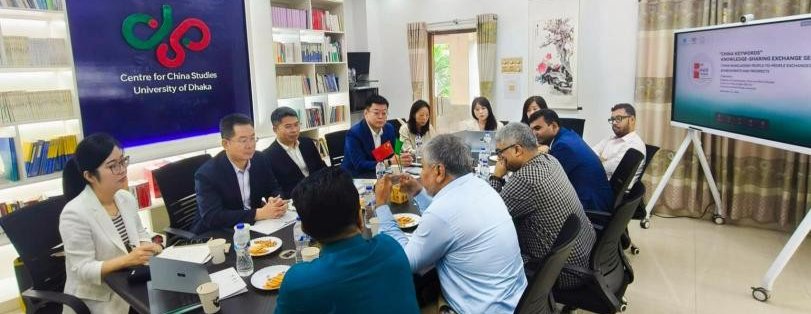
‘How Neighboring Countries View China’s Modernization Released in Bangladesh

‘How Neighboring Countries View China’s Modernization Released in Bangladesh

September 21, 2026

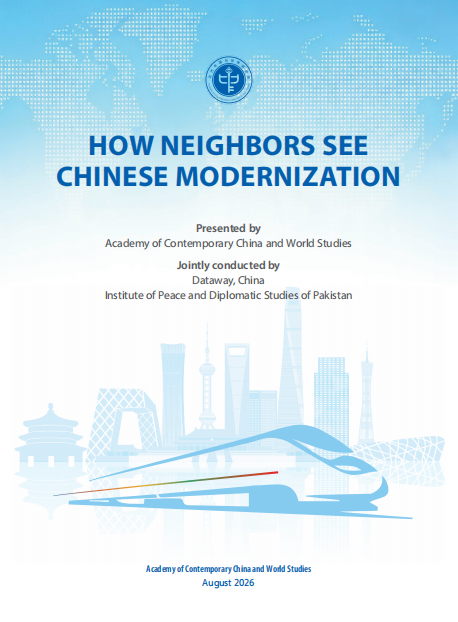
The survey was organized and prepared by a research team from ACCWS. Focusing on public perceptions of China’s modernization among neighboring Asian countries, the report examines how people in the region understand China’s development experience, development concepts, and cooperation practices.

The survey covered 10 Asian countries, including Tajikistan, Pakistan, Singapore, Thailand, and Vietnam. It also incorporated findings from the report China’s National Image in Bangladesh, released by the Centre for Alternatives in Bangladesh in 2025, conducting a comparative analysis of public perceptions of China’s modernization among people in different Asian countries.

The survey covered 10 Asian countries, including Tajikistan, Pakistan, Singapore, Thailand, and Vietnam. It also incorporated findings from the report China’s National Image in Bangladesh, released by the Centre for Alternatives in Bangladesh in 2025, conducting a comparative analysis of public perceptions of China’s

modernization among people in different Asian countries.

The report shows that China’s development achievements have become an important window through which people in Asian countries understand Chinese modernization. Achievements in areas such as technological innovation, infrastructure development, economic growth, poverty reduction, and international cooperation have attracted broad attention from regional publics.

The survey finds that people in neighboring countries increasingly understand China’s modernization through concrete development outcomes and practical experiences. Chinese products and technologies have become part of everyday life in many countries, while cooperation projects in infrastructure, industry, and connectivity have provided important channels for people to observe China’s development.

The report also highlights that young people represent an important group in understanding China and promoting people-to-people exchanges. Through social media, education, tourism, and other channels, young people have developed more diverse perspectives on China’s development and international cooperation.

The report notes that China and Bangladesh share common aspirations in exploring modernization paths suited to their own national conditions, improving people’s well-being, and promoting common development through openness and cooperation. It suggests that the two countries further strengthen youth exchanges, academic cooperation, cultural communication, and people-to-people interactions to enhance mutual understanding and expand cooperation opportunities.

Bangladeshi experts attending the event noted that the report provides an objective analysis of international perceptions of Chinese modernization and offers valuable reference for deepening China-Bangladesh people-to-people exchanges and enhancing mutual understanding between the two peoples.

The event was jointly hosted by ACCWS and Centre for China Studies SIIS-DU, with support from the Confucius Institute at the University of Dhaka. ACCWS is a national-level think tank specializing in international communication, global perception studies, and international public opinion research. The institute has conducted extensive research on how China is understood by the international community and has continuously released a series of research reports and publications to promote dialogue and mutual understanding between China and the world.

‘How Neighboring Countries View China’s Modernization Released in Bangladesh Read Post »

Scroll to Top