September 2026

World News

World News

By thegeoeconomics.com / September 30, 2026

Auto PLI may open to firms with Chinese investment Economic Times (23 Sept):
after Xi’s visit, the government is likely to review PLI applications from auto companies that have Chinese investment / existing FDI approvals. That is the first concrete industrial-policy signal of the thaw for manufacturers.

Flights: China Southern Guangzhou–Delhi back
China Southern was set to resume Guangzhou–New Delhi passenger service from 21 September, ending a six-year gap. That sits with the broader restoration of air links after the summit. Rediff

Sub-national outreach: Mumbai Ganesh + Ambassador note
Chinese Consul General Qin Jie attended a Ganesh event at Maharashtra CM Devendra Fadnavis’s residence (18 Sept). Ambassador Xu Feihong published a post-summit article (19–20 Sept) tying the BRICS handover to continued improvement in ties. This is the working-level cultural/political track ICEC already lives on. Vifindia

Trade data + “three mutuals”
Commerce Ministry figures released mid-September showed stronger Indian exports to China year-on-year, with imports also up. MEA (15 Sept) restated Modi’s line: normalisation needs mutual respect, mutual interest, mutual sensitivity, and core concerns cannot be ignored. Commerce Secretary Agrawal later called the momentum welcome but asked for a more balanced, predictable market. Vifindia

World News Read Post »

‘How Neighboring Countries View China’s Modernization Released in Bangladesh

‘How Neighboring Countries View China’s Modernization Released in Bangladesh

September 21, 2026

The survey was organized and prepared by a research team from ACCWS. Focusing on public perceptions of China’s modernization among neighboring Asian countries, the report examines how people in the region understand China’s development experience, development concepts, and cooperation practices.

The survey covered 10 Asian countries, including Tajikistan, Pakistan, Singapore, Thailand, and Vietnam. It also incorporated findings from the report China’s National Image in Bangladesh, released by the Centre for Alternatives in Bangladesh in 2025, conducting a comparative analysis of public perceptions of China’s modernization among people in different Asian countries.

The survey covered 10 Asian countries, including Tajikistan, Pakistan, Singapore, Thailand, and Vietnam. It also incorporated findings from the report China’s National Image in Bangladesh, released by the Centre for Alternatives in Bangladesh in 2025, conducting a comparative analysis of public perceptions of China’s

modernization among people in different Asian countries.

The report shows that China’s development achievements have become an important window through which people in Asian countries understand Chinese modernization. Achievements in areas such as technological innovation, infrastructure development, economic growth, poverty reduction, and international cooperation have attracted broad attention from regional publics.

The survey finds that people in neighboring countries increasingly understand China’s modernization through concrete development outcomes and practical experiences. Chinese products and technologies have become part of everyday life in many countries, while cooperation projects in infrastructure, industry, and connectivity have provided important channels for people to observe China’s development.

The report also highlights that young people represent an important group in understanding China and promoting people-to-people exchanges. Through social media, education, tourism, and other channels, young people have developed more diverse perspectives on China’s development and international cooperation.

The report notes that China and Bangladesh share common aspirations in exploring modernization paths suited to their own national conditions, improving people’s well-being, and promoting common development through openness and cooperation. It suggests that the two countries further strengthen youth exchanges, academic cooperation, cultural communication, and people-to-people interactions to enhance mutual understanding and expand cooperation opportunities.

Bangladeshi experts attending the event noted that the report provides an objective analysis of international perceptions of Chinese modernization and offers valuable reference for deepening China-Bangladesh people-to-people exchanges and enhancing mutual understanding between the two peoples.

The event was jointly hosted by ACCWS and Centre for China Studies SIIS-DU, with support from the Confucius Institute at the University of Dhaka. ACCWS is a national-level think tank specializing in international communication, global perception studies, and international public opinion research. The institute has conducted extensive research on how China is understood by the international community and has continuously released a series of research reports and publications to promote dialogue and mutual understanding between China and the world.

‘How Neighboring Countries View China’s Modernization Released in Bangladesh Read Post »

Service Trade: The New Engine for BRICS Sustainable Growth

Service Trade: The New Engine for BRICS Sustainable Growth

Professor Li Jiashan / September 21, 2026

As the BRICS community continues to expand and deepen multilateral cooperation, global economic competition is gradually shifting from traditional goods trade to modern service trade. For emerging economies seeking long-term, inclusive and sustainable development, service trade has become a core bond that connects industrial upgrading, digital transformation and people’s well-being. Within the BRICS framework, China and India, as the two largest developing economies in the bloc, boast distinctive and complementary service industry strengths, creating enormous potential for joint growth and South-South cooperation.

India has long established unique global advantages in modern service sectors. As a world-renowned service powerhouse, India leads in information technology services, digital solutions, pharmaceutical consulting, professional outsourcing and cross-border creative services. Its large pool of skilled English-speaking professionals, mature digital public infrastructure and globally recognized service standards have laid a solid foundation for high-value cross-border service trade. India’s service sector not only supports its own rapid economic modernization but also provides professional, cost-effective and scalable service resources for global industrial chains.

China presents equally powerful and complementary strengths in service trade. China excels in infrastructure services, cross-border logistics, financial services, cultural and tourism trade, engineering services and digital platform services. With complete industrial supporting systems, large-scale market demand and mature international service delivery experience, China can provide systematic, standardized and large-scale service support for BRICS industrial cooperation, cross-border investment and connectivity building.

The economic structures of China and India are highly compatible in service trade cooperation. While India dominates high-end professional and digital services, China leads in systematic industrial services and market-oriented comprehensive services. This complementarity enables the two countries to move beyond simple trade exchanges and jointly build a more resilient regional service industry chain. Under the BRICS multilateral mechanism, such bilateral synergy can further radiate to all member states, promoting balanced, green and sustainable development across the bloc.

In recent years, BRICS countries have reached wide consensus on advancing digital service trade, trade facilitation and small and medium-sized enterprise cooperation. Facing rising global unilateralism and trade protectionism, BRICS members are committed to safeguarding the multilateral trading system and promoting open, inclusive economic globalization. Service trade cooperation has become the most flexible, dynamic and promising field to drive new growth momentum.

For future BRICS sustainable development, deepening service trade integration carries profound practical significance. First, it helps all member states upgrade industrial structures, accelerate digital transformation and reduce reliance on traditional resource-driven growth models. Second, cross-border service cooperation facilitates technological exchange, talent mobility and experience sharing, improving the overall competitiveness of emerging economies. Third, service trade closely connects people’s livelihoods, covering education, healthcare, tourism and digital public services, enabling BRICS cooperation to deliver tangible benefits to ordinary people.

Looking ahead, BRICS countries should further open service sectors, optimize cross-border service supervision, strengthen digital service standard coordination, and expand local currency settlement in service transactions. By fully leveraging the complementary advantages between India and China, the bloc can build a closer, more efficient and innovative service trade cooperation ecosystem.

Driven by service trade, BRICS will continue to grow into an important force leading global sustainable development, empowering the collective revitalization of all developing countries.

Professor Li Jiashan
Beijing International Studies University
President of China institute for service trade

Service Trade: The New Engine for BRICS Sustainable Growth Read Post »

Can BRICS convert its growing size into effective cooperation

Can BRICS convert its growing size into effective cooperation

By Jianxi Liu / September 16, 2026

BRICS cooperation has reached an important turning point. What began two decades ago as a dialogue among four emerging economies has developed into a broader platform representing a substantial share of the world’s population, economic output and political influence. Its expansion has given the grouping greater weight, but it has also raised a more demanding question: can BRICS convert its growing size into effective cooperation?

The answer will depend on whether BRICS can translate political vision into practical results. At the just-concluded BRICS summit in New Delhi, Chinese President Xi Jinping called on BRICS countries to become “four pioneers”: pioneers in innovation-driven development, peace and stability, mutual learning between civilizations, and reform of global governance.  These four priorities offer a useful framework for understanding the grouping’s future responsibilities – and for testing whether it can meet them.

BRICS does not need to become a military or ideological bloc. Its value lies in bringing together major emerging economies and developing countries to coordinate their interests, strengthen the voice of the Global South and promote a more balanced international order. But declarations alone will not be enough. The credibility of BRICS will ultimately be measured by what it delivers.

The first of Xi’s four proposals is for BRICS to become a pioneer in innovation-driven development. This is perhaps the most direct response to the economic challenges facing emerging economies.

Many countries in the Global South remain constrained by weak industrial capacity, limited access to finance, technological dependence and vulnerability to fluctuations in commodity prices. They need more than market access. They need the ability to produce, innovate and move up the value chain.

BRICS cooperation should therefore focus on industrial upgrading, scientific research, artificial intelligence, digital connectivity and skills development. Xi has proposed greater cooperation in areas including AI, digital industries, smart manufacturing and science-and-technology talent development. These initiatives could help emerging economies participate more actively in the next phase of technological change.

However, technological cooperation will require more than sharing equipment or signing agreements. BRICS members need to develop open and inclusive platforms, support joint research and expand digital-skills training. They also need common approaches to data security, intellectual-property protection, cybersecurity and responsible AI governance.

This is closely connected to the idea of high-quality development. High-quality development is not simply rapid growth. It means higher productivity, stronger innovation, better jobs, environmental sustainability and greater resilience. BRICS should help its members move from dependence on raw materials and low-value manufacturing toward more advanced and productive economic activities.

China’s experience offers important lessons, but it should not be treated as a universal model. Each country must identify its own comparative advantages and development priorities. The broader lesson is that successful development requires investment in infrastructure, education, technology and institutions, as well as the flexibility to adjust policies as circumstances change.

Xi’s second proposal is for BRICS to become a pioneer in upholding peace and stability. This is especially important in a world marked by geopolitical rivalry, regional conflicts, unilateral sanctions and growing uncertainty.

BRICS can provide a platform for dialogue and help defend the principles of the United Nations Charter. Its members can support political settlements, oppose the use of force and encourage diplomatic solutions to international disputes.

This responsibility begins with the relationship between China and India. The two countries are major developing economies, leading members of BRICS and important representatives of the Global South. Their cooperation could strengthen the grouping, while prolonged confrontation could weaken its cohesion.

True, China and India have differences. They also compete in manufacturing, technology, trade and regional influence. But competition does not have to become confrontation. As Xi has said, the two countries should approach their relationship from a strategic and long-term perspective and seek to learn from each other’s strengths.

A stable China-India relationship would benefit not only the two countries but also the wider BRICS mechanism. Practical cooperation could begin in areas such as public health, climate change, food security, development finance, trade facilitation and people-to-people exchanges. The objective should not be to eliminate all differences, but to manage them responsibly and prevent bilateral tensions from blocking cooperation on shared interests.

BRICS will also need consistency in its approach to international crises. A credible commitment to peace cannot be selective. The group should apply its principles fairly, regardless of which major power or regional actor is involved.

Xi’s third proposal is for BRICS to become a pioneer in facilitating mutual learning between civilizations. This dimension is sometimes underestimated because it appears less concrete than trade, finance or technology. In fact, it is essential to building durable cooperation.

BRICS brings together countries with different political systems, cultural traditions, religions and historical experiences. Their diversity is not necessarily a weakness. It can become a source of creativity if members treat differences as an opportunity for learning rather than as a reason for suspicion.

China and India offer a particularly important example. Both are ancient civilizations with rich intellectual traditions and long histories of cultural exchange. Both have pursued modernization while seeking to preserve distinctive national identities. Greater exchanges among universities, think tanks, filmmakers, young people and business communities could help reduce misunderstanding and strengthen social foundations for bilateral relations.

Mutual learning should not be reduced to cultural performances or official commemorations. It should include serious exchanges on development policy, poverty reduction, urbanization, education, healthcare, environmental protection and digital transformation.

Such exchanges can also make economic cooperation more sustainable. Business relationships depend not only on contracts but also on trust and familiarity. People-to-people ties can provide a foundation for cooperation when political relations face difficulties.

Xi’s fourth proposal is for BRICS to become a pioneer in reforming and improving global governance. This is the area in which BRICS is likely to face the greatest expectations.

The existing international system has delivered important benefits, but its institutions no longer fully reflect the distribution of population, economic power and political influence. Developing countries remain underrepresented in major financial institutions, while the global trading system has become increasingly fragmented.

BRICS should push for practical reforms in the United Nations, the IMF, the World Bank and the WTO. Priorities could include greater representation for developing countries, improved access to development finance, more effective debt-management mechanisms, stronger climate financing and fairer rules for digital trade.

The grouping should also promote cooperation in local-currency settlement and cross-border payments, while recognizing that building a stable international financial system requires transparency, sound regulation and confidence among participants.

At the same time, BRICS should avoid turning global governance reform into a zero-sum contest between the Global South and the West. A more representative system should also be more effective. BRICS will gain wider international support if it presents itself as a force for inclusion, stability and problem-solving rather than as an instrument of confrontation.

The “four pioneers” provide BRICS with a coherent political framework. Innovation addresses development; peace creates the conditions for prosperity; mutual learning builds trust; and global-governance reform gives emerging countries a stronger voice.

But the framework will matter only if it produces measurable outcomes. Expansion alone will not make BRICS stronger. A larger grouping will be meaningful only if it can build trust, manage differences and deliver benefits to its members and the wider Global South.

Xi’s “four-pioneer” proposal gives BRICS a timely direction. The challenge now is to move from principle to practice. The Global South does not need another grand promise. It needs a platform that helps countries develop, trade, innovate, preserve peace and participate more fairly in global decision-making.

BRICS can become such a platform, but only if its ambition is matched by openness, discipline and action.

Jianxi Liu is a Beijing-based analyst of political and international relations. With 10 years of experience in media, she writes on topics pertaining to the US, the EU and the Middle East.

Can BRICS convert its growing size into effective cooperation Read Post »

The Timeless Pair: China, India, and the New Delhi Moment

The Timeless Pair: China, India, and the New Delhi Moment

By Himadrish Suwan / September 15, 2026

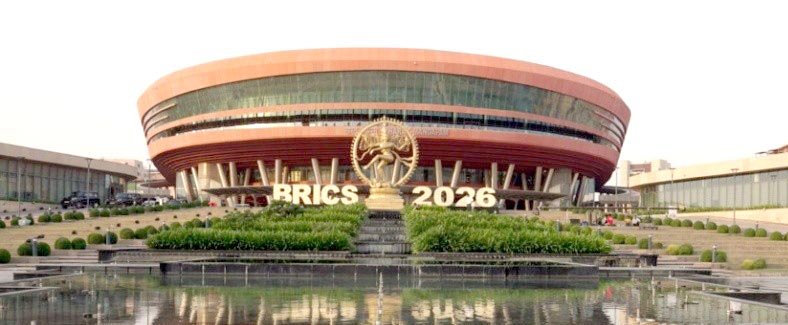
Bharat Mandapam convention center is all set to host the 18th BRICS Summit in New Delhi, India, September 10, 2026.

As chairman of the Confederation of Young Leaders of India, I believe one dimension deserves substantially greater attention: youth and people-to-people engagement.

The long-term China-India relationship could not be sustained through governmental engagement alone. The two countries are home to hundreds of millions of young people, students, researchers, entrepreneurs, innovators, and emerging leaders, yet opportunities for meaningful interaction between young Indians and Chinese remain few and far between.

We need more university partnerships, student exchange activities, young leader dialogues, research collaborations, cultural programs, and entrepreneurial networks connecting young generations in both countries.

Young people should not inherit outdated perceptions of one another. They should be given opportunities to meet, debate, collaborate, and understand each other’s societies directly.

My own engagements with Chinese institutions and young people have only reinforced my opinion that there is considerable curiosity about India in China, just as there is considerable interest in understanding China among young Indians.

Institutionalizing such engagement within the broader BRICS framework could be particularly valuable. A stronger BRICS youth architecture can connect young leaders not only from China and India, but also from across its increasingly diverse membership.

Beyond New Delhi
Summits create political direction, but institutions, businesses, universities, social organizations, and citizens must transform that direction into lasting cooperation.

For China and India, this means continuing dialogue even when circumstances are difficult. It means expanding areas of practical cooperation while addressing differences responsibly. Above all, it means recognizing that neither geography nor history allows these two civilizations to remain indifferent to one another.

India’s timeless philosophy of Vasudhaiva Kutumbakam (the world is one family) offers a valuable principle for this moment, which finds a natural echo in China’s vision of a community with a shared future for humanity.

A multipolar world should not become more divided. BRICS should not define its success based on opposition to any country or grouping. Its greater contribution can be to advocate a global architecture that is more representative, inclusive, and responsive to the aspirations of developing societies.

China and India have assumed a special responsibility within that endeavor. The relationship between the two countries will inevitably encounter moments of complexity. Yet history should encourage leaders to take a longer view. Civilizations measured in millennia should have the confidence to navigate differences measured in years.

As BRICS moves beyond the New Delhi summit, the challenge becomes larger than drafting declarations or expanding institutional mechanisms. It is about building cooperation habits and creating constituencies for peace, development, and dialogue.

If China and India can steadily expand mutual understanding while responsibly managing their differences, their cooperation can become a powerful force for stability and development—not only for Asia, but also for the Global South and the wider world.

The author is chairman of the Confederation of Young Leaders of India. 

(The content is provided by Beijing-based China-India Dialogue.)

The Timeless Pair: China, India, and the New Delhi Moment Read Post »

Civilizational Foundations of BRICS Cooperation

Civilizational Foundations of BRICS Cooperation

By Sachin Budhauliya / September 15, 2026

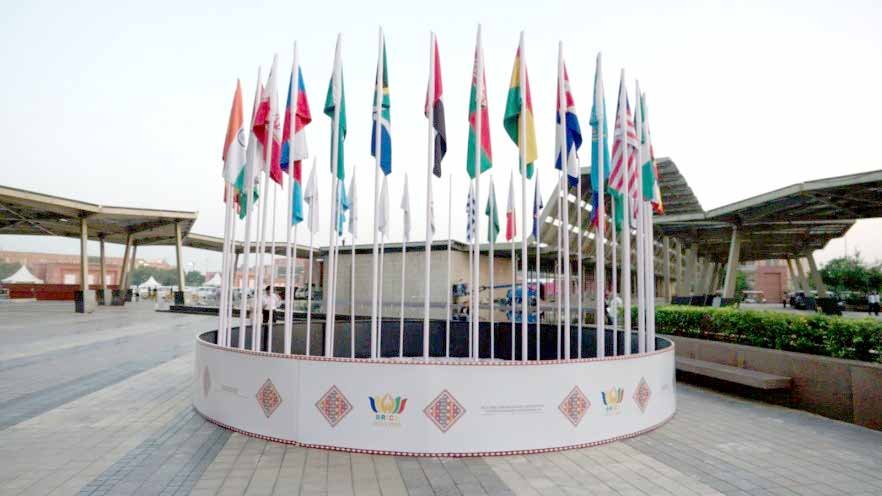
Flags of BRICS countries are seen at Bharat Mandapam in New Delhi, India, September 10, 2026, ahead of the 18th BRICS Summit.

When examining the relationship between China and India, some analysts tend to focus on friction in contemporary geopolitics. At multilateral platforms like BRICS, however, meetings between their leaders are closely watched for signs of progress.

Viewing these two neighbours strictly through the lens of 20th-century geopolitical theory misses the larger picture. Long before modern nation-states or trade blocs emerged, China and India stood as enduring civilizational pillars. Over centuries, they contributed richly to human philosophy, science, and ethics.

This longer history suggests that both nations can rise above periodic diplomatic difficulties by looking past temporary differences and drawing strength from their shared cultural heritage and global contributions. As India chairs the BRICS in 2026, this perspective is especially timely. The future of China-India relations will continue to require careful management of differences, but it can also benefit from a stronger emphasis on dialogue, mutual understanding, and common ground.

A Long History of Intellectual Exchange
The development of human civilization was greatly enriched by innovations and ideas that originated from the Indian subcontinent and the Chinese heartland. Exchange along the ancient Silk Road and maritime trade routes was never merely about commerce — it served as a conduit for transformative ideas.

India gave the world foundational concepts of “Ahimsa” (non-violence), deep metaphysical enquiry through the Upanishads, and the compassionate frameworks of Buddhism. Chinese philosophies that have gone global include Confucian ethics, emphasizing social duty, filial piety, and governance through moral example, alongside the natural harmony of Daoism.

Indian scholars formulated the concept of zero and the decimal system, which revolutionized global mathematics, and medical practitioners developed the holistic medical science of Ayurveda. China introduced transformative technological breakthroughs — papermaking, printing, gunpowder, and the compass — alongside advancing sophisticated astronomy and acupuncture.

The eighth-century astronomer Gautama Siddha, also known as Qutan Xida in China, was of Indian descent yet born in Chang’an, the thriving capital of the Tang Dynasty (618-907). He played a pivotal role in compiling The Great Tang Treatise on Astrology of the Kaiyuan Era. Several long and arduous journeys undertaken by Chinese scholar-monks, including Faxian’s pilgrimage and Xuanzang’s years of study at Nalanda, proved equally crucial to the exchange of knowledge and culture between the two civilizations.

Common Values of Humanity
The modern world is confronted with geopolitical fragmentation, economic instability, and climate crises. Against this backdrop, the core values embedded in Indian and Chinese classical traditions present a constructive alternative to competitive, zero-sum worldviews.

India’s ancient ethos of “Vasudhaiva Kutumbakam” (“The world is one family”) resonates strongly with the traditional Chinese concept of tianxia datong (“universal harmony under heaven”). Both philosophies reject the premise that international relations must involve a clash of civilizations. Instead, they view the global community as an interconnected whole, in which national growth and global well-being are mutually reinforcing.

Long before modern climate agreements, both traditions viewed human life as intrinsically connected to the natural world. The Indian reverence for nature and the Chinese principle of harmony between heaven and humanity offer enduring ethical foundations for global environmental stewardship today.

For centuries, cultural currents between China and India flowed primarily through scholars, monks, merchants, and intellectual exchange. The Five Principles of Peaceful Coexistence, officially initiated in the 1950s, underscore mutual respect for sovereignty and territorial integrity, mutual non-aggression, non-interference in each other’s internal affairs, equality and mutual benefit, and peaceful coexistence.

Cultural Understanding through BRICS
In today’s international system, the BRICS framework offers a vital institutional platform for New Delhi and Beijing to translate these historical values into practical cooperation.

Within BRICS, the two nations have worked together to give emerging economies a stronger voice in global decision-making. The success of the New Development Bank demonstrates that China and India can, through cooperation, take the lead in establishing multilateral financial institutions in the future to finance essential infrastructure across the Global South.

Yet institutional cooperation has shown its limits. Diplomatic summits and disengagement protocols are critical for managing short-term border tensions, but they merely treat symptoms, not the deeper trust deficit. Deep-rooted civilizational respect offers a more reliable foundation for recovery.

To build long-term stability, both countries need to inject more cultural diplomacy into their engagement. BRICS and regional summits should host cultural forums focused on shared history, classical literature, philosophy, and ancient arts. Expanding university partnerships, joint research, and translation projects involving Chinese and Indian scholars would help train future policymakers who understand each other’s cultural contexts. Student exchange programs between Chinese and Indian universities would further help cultivate a new generation of scholars and policymakers. Encouraging cultural tourism, media exchange, and youth initiatives would help ease rigid stereotypes and soften media-driven public hostility.

The BRICS framework offers China and India a practical platform for collaboration and coordination on global challenges, yet institutional mechanisms alone cannot substitute for genuine trust. By drawing on their shared civilizational heritage and common values of harmony, dialogue, and mutual respect, both countries can expand cooperation, deepen mutual understanding, and build a more stable and constructive relationship in a multipolar world.

The author is executive editor of Hindusthan Samachar, a leading multilingual news agency in India.

(The content is provided by Beijing-based China Pictorial Publications.)

Civilizational Foundations of BRICS Cooperation Read Post »

The BRICS 2026 logo is seen in New Delhi, India, September 10, 2026, ahead of the 18th BRICS Summit.

The BRICS 2026 logo is seen in New Delhi, India, September 10, 2026, ahead of the 18th BRICS Summit.

BRICS at 20: A New Decade of Cooperation
By Rajiv Bhatia / September 15, 2026

The 18th BRICS Summit, scheduled to be held in New Delhi on September 12 and 13, will mark two decades since this plurilateral forum was first organized. It is an informal institution with great influence in the world. What began as a grouping of four countries has expanded into a large family of 11 member states and 10 partner states today. More than 30 countries have expressed interest in joining the BRICS family.

So has it actually been the hugely successful project that such data would suggest? Or do the critics and skeptics have a case that BRICS is mostly just talk?

The reality is more complex and nuanced.

Clearly, if the leaders of BRICS member and partner countries believed that BRICS was not a useful forum, they would not attend the Delhi Summit, nor would any of the other invited leaders. But considering that a likely majority of these nations and entities will be represented at the highest level, their presence and proactive participation indicate confidence in the utility and value of what BRICS has achieved so far. This also shows a commitment to helping it realize its potential.

Greater Influence
BRICS has emerged as one of the most important forums for the Global South, resolved to define and advance a multi-dimensional agenda covering reform of international governance, sustainable development, increased financing for development, and promotion of a fairer world. A broad consensus among international watchers holds that BRICS acts as a counterweight to the G7, representing the perspectives and interests of emerging markets and developing countries (EMDCs) and serving as a vital player in the G20.

At their meeting in May 2026, the BRICS foreign ministers agreed that the forum continued to play a pivotal role in raising the concerns and priorities of the Global South as well as in promoting a more just, sustainable, inclusive, representative, and stable international order based on international law.

As the chair of the 2026 BRICS gathering, India, a founding member, is not only conscious of its responsibilities but committed to strengthening the forum. Having assumed the BRICS presidency in 2012, 2016, and 2021, India recognizes its fourth opportunity as coming at the most challenging time considering the ongoing major conflicts in Ukraine and the Middle East. Hence, it is important to manage complex geopolitics in a prudent manner to navigate the BRICS ship through deep fissures, friction, and tensions through focusing on intra-BRICS cooperation in diverse sectors. Observers hope the grouping will be able to emerge as a stronger and motivated player on the world stage thanks to efforts from all members.

Towards a More Cohesive BRICS
Beyond geopolitics, India’s BRICS chairship has also placed emphasis on deepening intra-BRICS cooperation. Its stated overarching theme for this session is “Building for Resilience, Innovation, Cooperation and Sustainability.” Over 350 events and meetings have already been held involving ministers, think tanks, civil societies, business, youth, and other stakeholders. A preview of what the New Delhi summit this year could achieve can come in two different ways.

First, it will review the major gains of the previous three BRICS summits. The Johannesburg summit in 2023 portrayed BRICS as a partnership for “inclusive multilateralism,” committed to fostering a global environment of peace and development. It succeeded in resolving the vexing issue of BRICS membership expansion.

The Kazan summit in 2024 highlighted the virtues of multipolarity and multilateralism, with the former expanding opportunities for the EMDCs, and the latter presented as an instrument to secure a more agile and responsive global system. Russia’s BRICS presidency helped evolve consensus on new partner countries. The Rio de Janeiro summit in 2025 voiced serious concern over the prevailing polarization and fragmentation among states. It also advanced implementation of the Strategy for BRICS Economic Partnership.

Second, meetings hosted since January 2026 reflect a comprehensive and inclusive approach on all dimensions of the BRICS agenda. A quick recall of some of the key deliberations and their outcomes at the ministerial level provides useful clues. Environment ministers, for example, agreed that the interlinked challenges of climate change, biodiversity loss, and land degradation demand urgent enhanced international cooperation. Culture ministers emphasized culture’s empowering role as a driver of sustainable development and agreed to create a platform for cooperation involving cultural and creative industries. Education ministers sought ways to strengthen early childhood care and education as well as foundational literacy and numeracy. Trade ministers did not issue a joint declaration but reaffirmed the commitment to promoting a fair, open, and rules-based trading system, with a well-functioning World Trade Organization at its core.

The BRICS Think Tanks Council presented a set of recommendations following its detailed deliberations in Lucknow on August 25. They have identified practical pathways to build economic and climate resilience, deepen cooperation on innovation and technology, advance sustainable development, and support a more inclusive and effective multilateral system.

In the days leading up to the New Delhi summit, two observations have become particularly relevant: First, BRICS has struck a sound balance between expanding its family and creating greater cohesion within it. Hence, greater emphasis should be placed on deepening cooperation among the existing BRICS members for at least the next three years. This process needs to be nurtured carefully and continuously. Second, a critical requirement to ensure the continuing success of BRICS is strengthening coordination and convergence among its members, especially among the founding members. They may not agree on every issue, but they must work together closely to expand the arc of agreement and demonstrate mutual sensitivity where they disagree.

This is the path to BRICS becoming a stronger player in the international arena. China, which will assume the presidency of BRICS in 2027, can advance BRICS cooperation and cohesion even further.

The author is a distinguished fellow at Gateway House, a Mumbai-based foreign policy think tank. A former diplomat, he served as the Indian ambassador to several countries and is the author of three books on India’s foreign policy.

(The content is provided by Beijing-based China Pictorial Publications.)

The BRICS 2026 logo is seen in New Delhi, India, September 10, 2026, ahead of the 18th BRICS Summit. Read Post »

BRICS: Pioneering a More Equitable International Order

BRICS: Pioneering a More Equitable International Order

By Mohammed Saqib / September 15, 2026

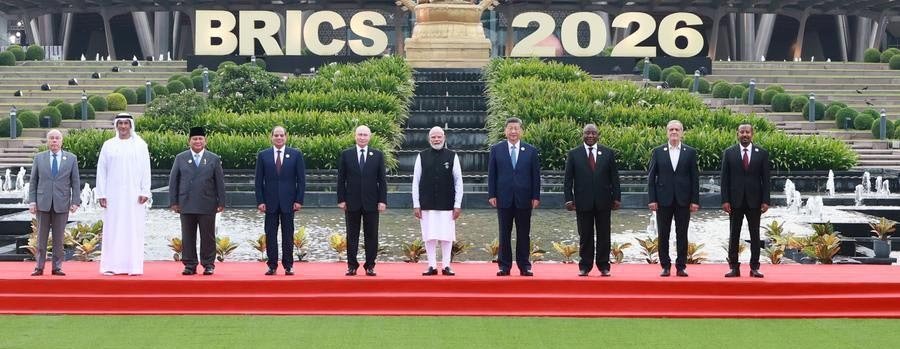
At the 18th BRICS Summit in New Delhi, Chinese President Xi Jinping’s speech covered a wide range of topics, including a call for peace in the Middle East, a push for innovation in artificial intelligence, and a call to reform and improve global governance.

Xi noted that the situation in the Middle East remains complex and fluid. He said that the war is against the common interests of the international community and BRICS should be a pioneer in upholding peace and stability. China will work with fellow BRICS members to play a due role in bringing peace and tranquility to the Middle East.

One of the most forward-looking aspects of Xi’s remarks was his focus on artificial intelligence and innovation-driven development. This focus goes beyond economic issues; it also aims to shape future technology norms. By rallying around innovation, BRICS can advance shared progress.

Xi also noted that BRICS should be a pioneer in reforming and improving global governance. Many countries in the Global South back this vision, as they feel that current international institutions are largely dominated by Western powers. However, established power structures are unlikely to change without strong action. Only with solid coordination among BRICS members can the bloc turn its vision into tangible action.

Xi’s meeting with Indian Prime Minister Narendra Modi, on the sidelines of the summit, focused on high-quality development of greater BRICS cooperation and mutually beneficial cooperation between China and India. The meeting signals a move to improve bilateral relations. Meaningful collaboration between the two countries depends on ongoing dialogue and commitment.

Xi’s vision carries far-reaching implications. With China set to assume the BRICS chairship in 2027, expectations are rising for translating this vision into reality. If BRICS members can jointly turn commitments into concrete initiatives for peace, innovation and governance reform, the bloc may grow into a pioneer of our times.

The author is secretary-general of India China Economic and Cultural Council (ICEC).

BRICS: Pioneering a More Equitable International Order Read Post »

Scroll to Top